
Social Security’s trustees report said the program is on track to become insolvent by the end of 2032, when the program’s beneficiaries will get a 22% cut in their monthly checks.
Social Security guarantees income to over 70 million Americans. Across-the-board benefit cuts would significantly impact retirees, disabled workers and survivors, especially amid rising living costs.
Social Security keeps more Americans out of poverty than any other program in the U.S., according to the Center on Budget and Policy Priorities, a left-leaning think tank.
In last year’s report, the program’s trustees projected that the Old-Age and Survivors Insurance fund, which pays benefits to retirees and survivors of deceased workers, would be depleted in 2033. In August, the agency moved the insolvency date to the end of 2032, citing the One Big Beautiful Bill Act’s effect on taxation of benefits.
On Tuesday, the Social Security Administration said the agency would pay 78% of benefits upon insolvency.
Social Security has long faced funding pressures, though the projected trust fund depletion date shifts from year to year as economic and demographic factors change. The core challenge is an aging U.S. population: More Americans are collecting benefits, while fewer workers support the program through payroll taxes, forcing Social Security to draw down its trust funds.
A common misconception is that insolvency would mean Social Security could no longer pay benefits. Instead, beneficiaries would continue receiving monthly checks, although at reduced levels — an outcome advocates for older Americans warn could create financial hardship for millions of the program’s beneficiaries.
“The Trustees report is essentially an annual financial checkup for Social Security,” said Richard Johnson, vice president of financial security at the AARP Public Policy Institute, in a May 28 conference call to discuss the program’s financial issues.
He added, “When we talk about Social Security solvency date, it’s important to be precise about what insolvency means and what it doesn’t mean. It doesn’t mean that Social Security will stop paying benefits. It does not mean the program is bankrupt. Social Security will continue to receive payroll tax revenue from workers and employers.”
Projected cuts
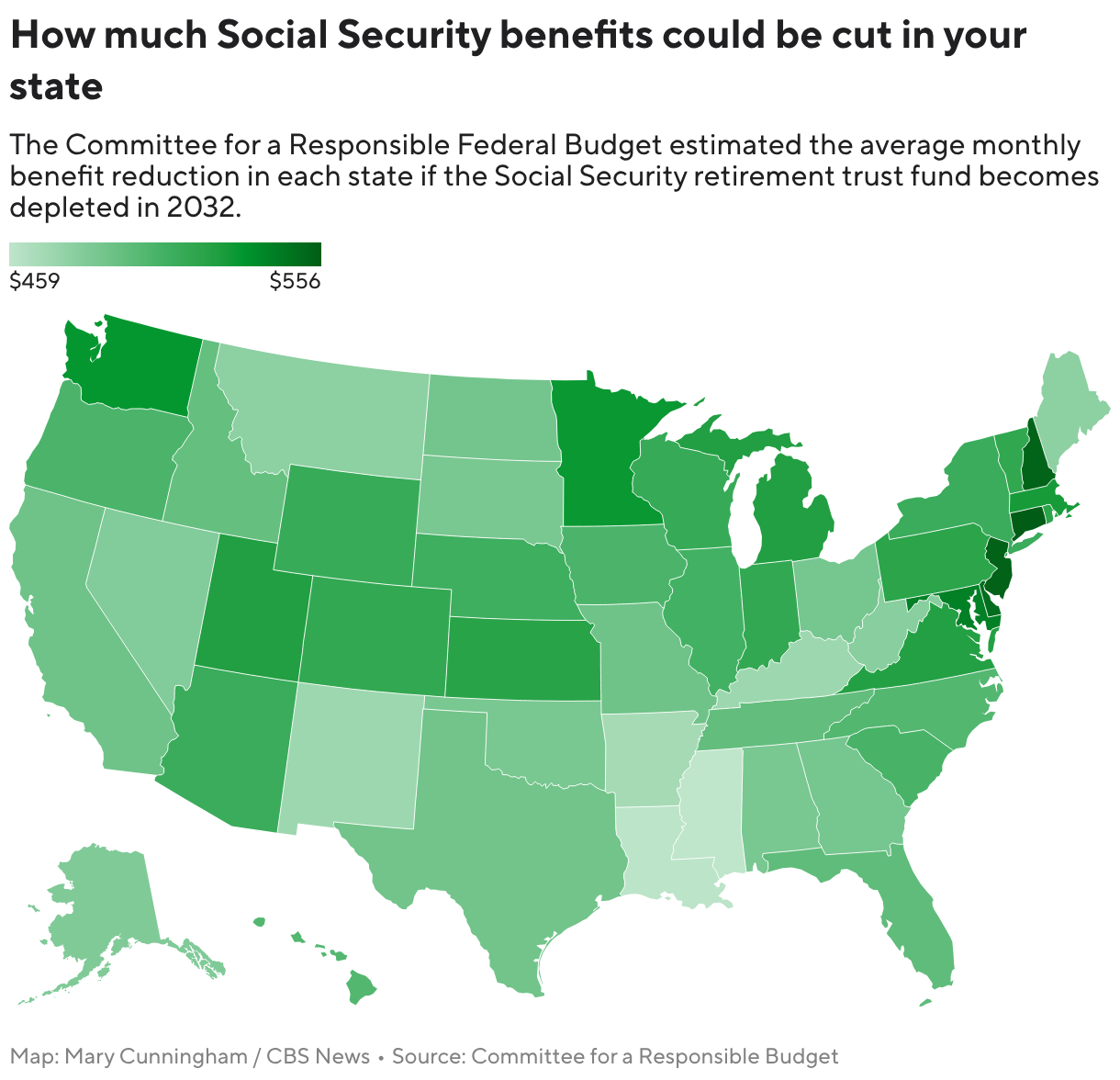
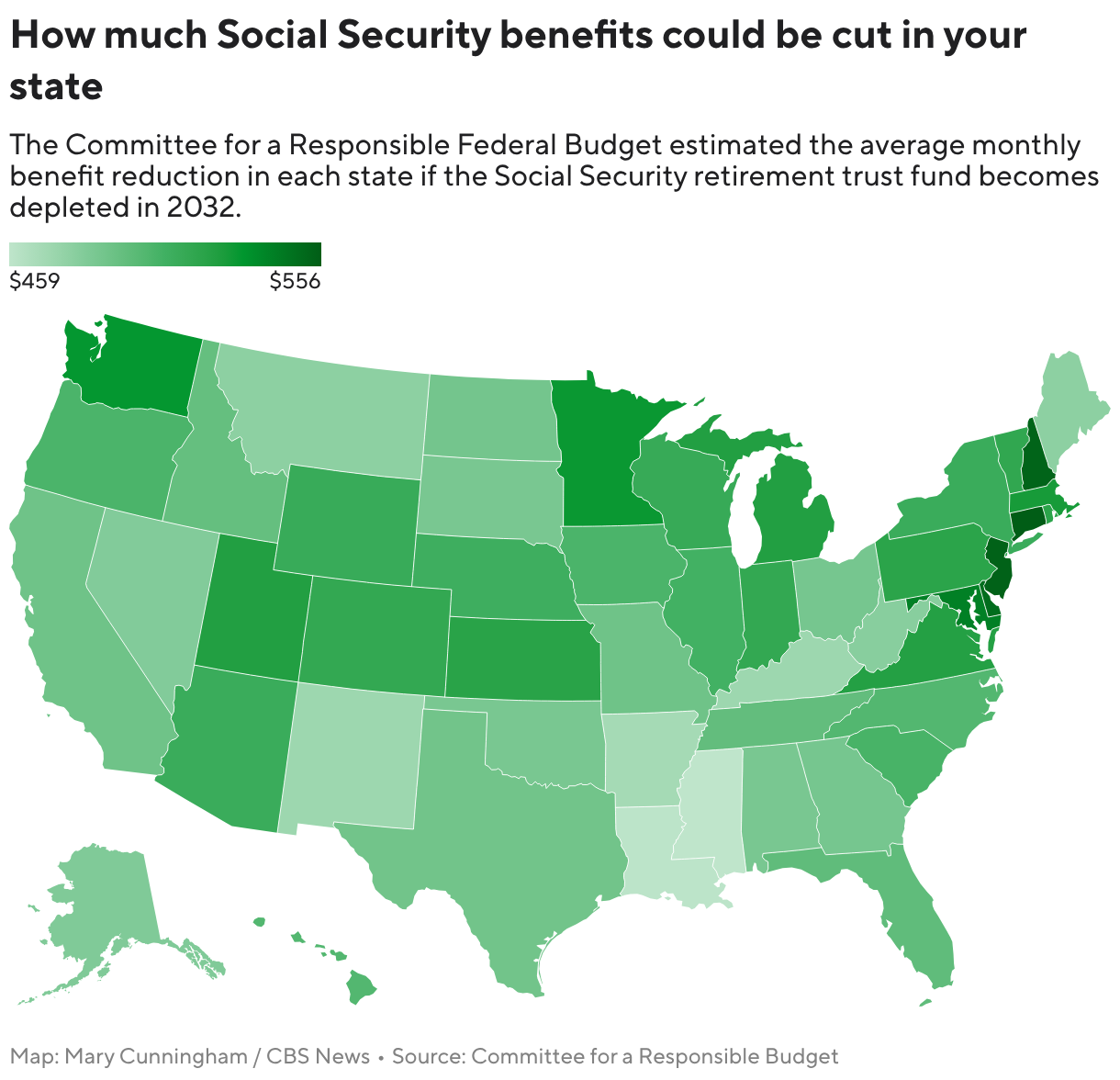
Based on last year’s Trustees report, Social Security’s beneficiaries could see their monthly benefit checks slashed by an average of about $500 if the program’s retirement trust fund becomes insolvent, according to a report published earlier this month by the Committee for a Responsible Federal Budget, a fiscal policy think tank.
The reduction would amount to a 24% cut in the typical benefit payment, the analysis found.
Advocacy groups, including AARP, have long urged Congress to strengthen Social Security’s finances. Proposals generally involve either raising additional revenue, reducing future benefits or some combination of the two. Some Republicans have proposed raising the full retirement age above 67, while many Democrats favor increasing payroll tax revenue.
For instance, some advocates have pushed to eliminate the income cap on the payroll tax. Currently, workers who earn over $184,500 don’t pay Social Security taxes on any amount above that.