
The conversation around car ownership in India is often reduced to a simple question: should you buy petrol, diesel, or electric? But the real answer lies not in the sticker price, but in the total cost of ownership over time. When you factor in fuel, maintenance, insurance, and resale value, the equation changes dramatically. To understand this clearly, let’s analyze the Hyundai Creta which is sold in all three versions: Petrol, Diesel, and EV. Let’s try and understand what it truly costs to live with each of them over five years.To keep the comparison realistic and relevant, we’ve used Delhi-specific conditions. Fuel prices are assumed at around Rs 100 per litre for petrol and Rs 90 per litre for diesel. Electricity for home charging is taken at an average of Rs 7 per unit. Also, for efficiency, let’s consider real world average figures rather than ARAI claims. For that, let’s take 15 kmpl for petrol, 20 kmpl for diesel, and roughly 8 km per kWh for an electric SUV. Annual usage is fixed at 15,000 km, which translates to 75,000 km over five years. This should be a fair estimate for an urban private car owner.
Petrol SUV vs Diesel SUV vs EV SUV: Upfront Cost
Starting with purchase price, the petrol-powered Creta manual comes in at approximately Rs 12.80 lakh on-road in Delhi. The Diesel-Manual sits higher at around Rs 15 lakh, while the Creta Electric commands a significantly steeper starting on-road price of Rs 19.50 lakh. It’s important to note that these figures are indicative estimates based on current pricing trends, not exact costs.
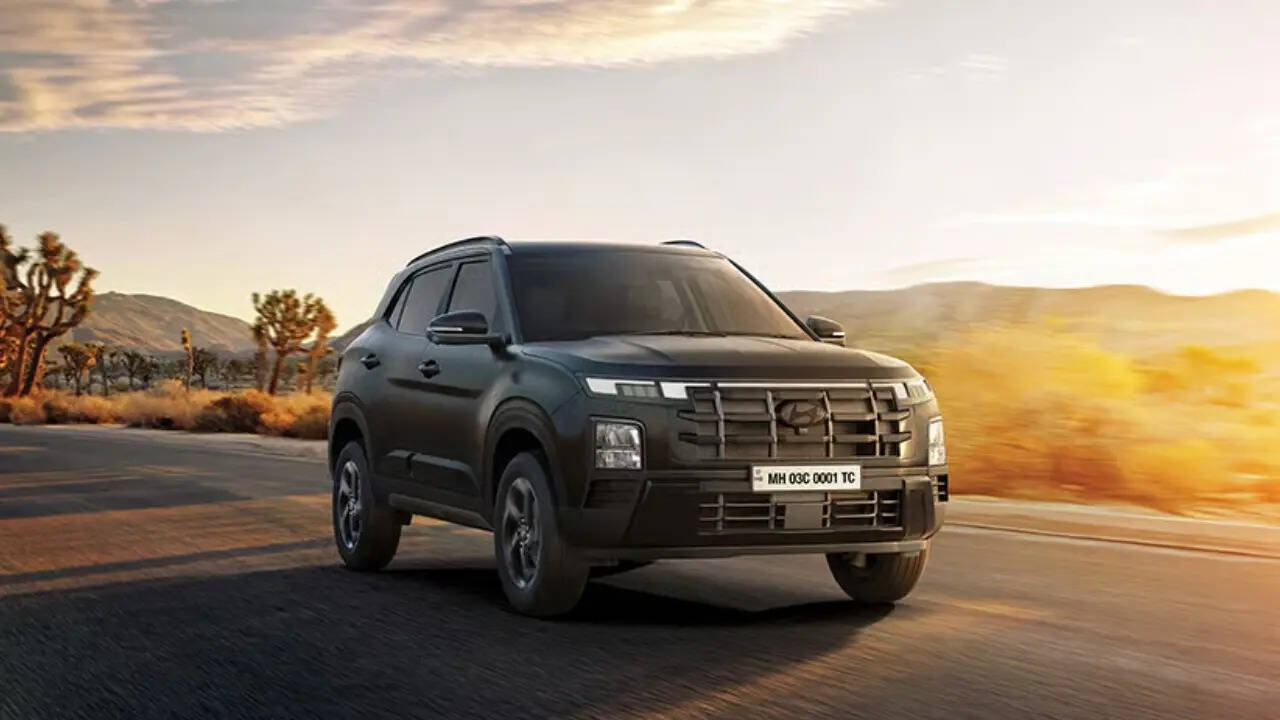
Hyundai Creta Petrol/Diesel.
This means the EV begins its ownership journey with a disadvantage of roughly Rs 7 lakh compared to petrol, and about Rs 4-5 lakh over diesel. This upfront gap is often the biggest deterrent for buyers considering electric cars.
Petrol SUV vs Diesel SUV vs EV SUV: Estimated running costs
When it comes to running costs, the difference between the three powertrains becomes very clear. In Delhi, if petrol is considered to be around Rs 100 per litre, and with a real-world efficiency of roughly 15 kmpl, the running cost works out to about Rs 6.6 per km. Diesel, priced at approximately Rs 90 per litre and delivering close to 20 kmpl, brings the cost down to around Rs 4.5 per km. For electric vehicles, assuming home charging at an average tariff of Rs 7 per unit and an efficiency of about 8 km per kWh, the running cost drops sharply to nearly Rs 1 per km. Over a 5-year period covering 75,000 km, this translates to roughly Rs 5 lakh for petrol, about Rs 3.3–3.5 lakh for diesel, and just Rs 70,000–75,000 for an EV. This is a massive gap. However, home charging plays a crucial role here. (Estimated data).
| Powertrain | Fuel/Energy Price (per unit) | Real-World Efficiency | Running Cost (per km) | 5-Year Cost (75,000 km) |
| Petrol | ₹100 per litre | 15 kmpl | ~₹6.6 | ~₹5,00,000 |
| Diesel | ₹90 per litre | 20 kmpl | ~₹4.5 | ~₹3,37,500 |
| Electric (EV) | ₹7 per unit | 8 km per kWh | ~₹0.88 | ~₹70,000 |
Petrol SUV vs Diesel SUV vs EV SUV: Service and insurance
When it comes to maintenance, petrol cars are relatively affordable, averaging around Rs 10,000–Rs 20,000 per year for routine servicing. Diesel cars are typically 20–30 percent more expensive due to costlier components, and added systems like turbochargers, taking annual costs to roughly Rs 12,000–Rs 23,000. Electric vehicles, with far fewer moving parts and no engine-related components, are significantly cheaper to maintain, usually costing around Rs 2,000–Rs 7,000 per year. Over five years, this translates to roughly Rs 50,000–Rs 80,000 for petrol, Rs 60,000–Rs 1 lakh for diesel, and just Rs 15,000–Rs 35,000 for an EV.
Insurance costs, however, tilt slightly in favour of conventional cars. Over five years, a compact petrol SUV would cost about Rs 60-70,000 to insure, while a diesel variant would be marginally higher at Rs 1.1 lakh. EVs, due to their higher upfront cost and expensive battery packs, typically command higher premiums, taking the five-year insurance outgo to around Rs 1.25 lakh. This partially offsets the savings made in maintenance, though not significantly.
| Feature | Petrol | Diesel | Electric (EV) |
| Annual Service Cost | ₹10k – ₹20k | ₹12k – ₹23k | ₹2k – ₹7k |
| 5-Year Maint. Total | ₹50k – ₹80k | ₹60k – ₹1L | ₹15k – ₹35k |
| 5-Year Insurance | ~₹60k – ₹70k | ~₹1.1L | ~₹1.25L |
| Combined 5-Year Total | ₹1.1L – ₹1.5L | ₹1.7L – ₹2.1L | ₹1.4L – ₹1.6L |
Petrol SUV vs Diesel SUV vs EV SUV: Resale value
Resale value is where things get interesting, especially in a city like Delhi. After five years, a petrol car like the Creta petrol is expected to retain about 60 percent of its value, translating to roughly Rs 7.8 lakh. Diesel cars, often have better resale value than their petrol counterparts but in the case of Delhi where NGT’s 10-year diesel rule is applicable, it might result in apprx Rs 80,000-Rs lakh lower than its petrol counterparts. EV resale values are still evolving, but current trends suggest a retention of about 40 percent. It also depends on the battery health, which constitutes a major part of the upright value. Putting all the numbers together over five years, the petrol-powered Creta ends up costing roughly Rs 11–11.5 lakh, factoring in fuel , maintenance , insurance, and resale. The diesel Creta comes slightly lower at around Rs 10.5–11 lakh, benefiting from better fuel efficiency despite higher servicing and insurance costs. The Creta Electric, despite its significantly higher upfront price, totals approximately Rs 12–13 lakh over five years, as its low running and maintenance costs are offset by the steep initial cost and lower resale value.
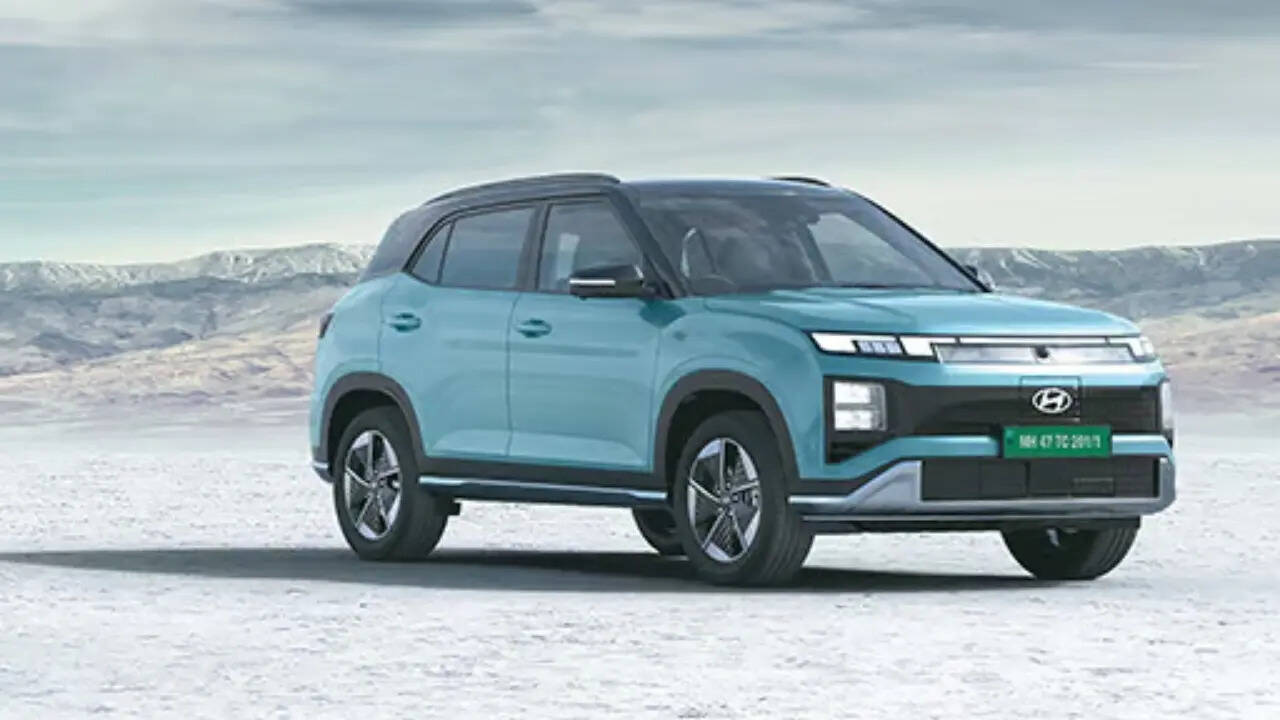
Hyundai Creta Electric.
Petrol SUV vs Diesel SUV vs EV SUV: Who wins?
That said, the conclusion isn’t as simple as declaring EVs the outright winner. Their advantage depends largely on usage. If you drive around 15,000 km or more annually, the lower running costs justify the higher upfront price. For low-mileage users, however, the gap narrows, making petrol cars more sensible. Diesel, meanwhile, remains a strong middle ground, especially for frequent highway users.Charging infrastructure is another critical variable. Relying heavily on public fast chargers can increase the cost per kilometre substantially, reducing the EV’s financial advantage. In the end, the real cost of owning a car in India is not defined by the fuel type alone, but by how you use the vehicle. Petrol suits low-mileage, hassle-free ownership. Diesel works best for long-distance, high-efficiency driving. EVs, on the other hand, reward consistency: the more you drive, the more you save.