Washington — Over a third of the Senate’s seats are up for election in 2026, and until recently, Republicans appeared exceedingly confident about their prospects of remaining in control after the midterm elections this fall.
While Republicans are defending more seats, many of them are in states that President Trump won by comfortable margins in the last election. With few opportunities for pickups and a handful of open seats to defend, the 2026 cycle has posed an uphill battle for Democrats.
But the unpopular war with Iran and stubborn affordability issues have given Democrats cause to be more hopeful about their chances of flipping key seats and even winning control of the Senate. In CBS polling released last month, more voters said they’d prefer to see Democrats control Congress than Republicans.
Political wisdom holds that the party controlling the White House typically loses seats in the House in the midterm elections. Accordingly, Republicans are pushing to hold onto their majority of 53 in the upper chamber to avoid the possibility that Democrats might win majorities in both houses of Congress. Democrats must net four more seats to take the majority.
Here are the key races that will decide control of of the upper chamber:
Maine race pits governor against progressive oyster farmer in primary as Democrats vie to unseat Susan Collins
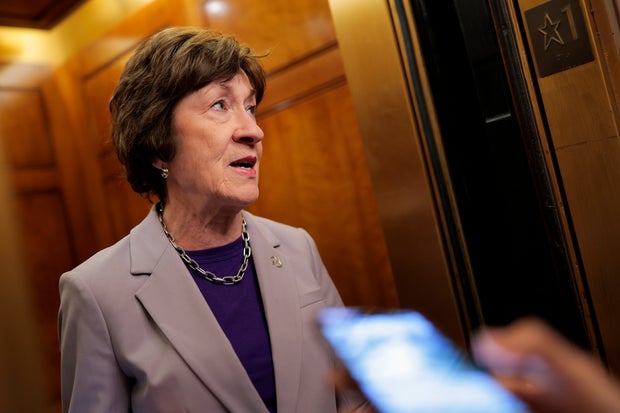
GOP Sen. Susan Collins is fighting to hold onto her seat in the Senate. The five-term senator has fended off a handful of challenges from Democrats in previous races. But whether she can prevail in a state that Kamala Harris won by almost seven points in 2024 remains to be seen.
Maine Gov. Janet Mills and veteran and oyster farmer Graham Platner are vying for the Democratic nomination, with the primary set for June 9. Mills, 78, entered the race at the urging of Democratic Party leaders. But Platner, a 41-year-old who has billed himself as an anti-establishment candidate, has secured backing from prominent progressives, including Sens. Bernie Sanders of Vermont and Elizabeth Warren of Massachusetts. Recent polls have shown Platner leading Mills by significant margins.
Heather Diehl / Getty Images 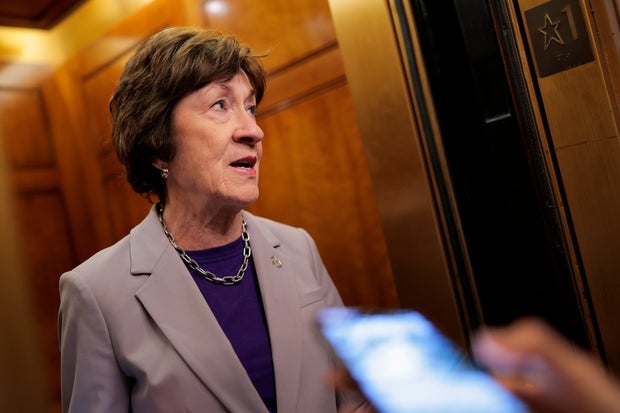
The Cook Political Report rates the race as a toss-up. Collins, who wields wide influence in the chamber as the chair of the powerful Senate Appropriations Committee, is among the most independent-minded in the Republican conference, which has made her the subject of criticism from President Trump. But Senate GOP leaders have stood behind her, and the Senate Leadership Fund, the leading Senate GOP super PAC, announced an investment of $42 million in advertising reservations in the race.
Michigan Senate seat is toss-up with Israel defining Democratic primary, Mike Rogers pursuing 2nd Senate bid
Sen. Gary Peters’ decision not to seek reelection opened up a competitive Democratic primary in the Great Lakes State. Rep. Haley Stevens, state Sen. Mallory McMorrow and former Michigan health official Abdul El-Sayed are vying for the Democratic nomination in a primary that has become ugly with intraparty fighting in recent months. With the largest concentration of Arabs in the U.S. in Michigan, the U.S.’ relationship with Israel and the war in Gaza have been central issues in the campaign so far. The primary is set for Aug. 4.
On the Republican side, former GOP Rep. Mike Rogers is making another play for a Michigan Senate seat after losing to Sen. Elissa Slotkin in the last election. The Senate Leadership Fund announced a $45 million investment in the race.
Without the advantage of an incumbent in the race, and after the state has flipped between supporting Democrats and Republican presidents in recent elections, Michigan is among the seats considered most vulnerable for Democrats. The Cook Political Report rates Michigan as a toss-up.
Ohio: Sherrod Brown tries comeback bid, running for Vance’s former seat
Former Democratic Sen. Sherrod Brown’s comeback bid has made for a competitive race in Ohio, despite the Buckeye State’s rightward shift in recent years.
Brown represented Ohio in the Senate for three terms before losing his seat to GOP Sen. Bernie Moreno in 2024. And while President Trump won the state at the time by more than 10 percentage points, Brown lost to Moreno by less than four points. With the midterm dynamics, and Brown’s strong working-class brand in the state, Democrats see an opening for a pick-up.
Stephen Maturen / Getty Images 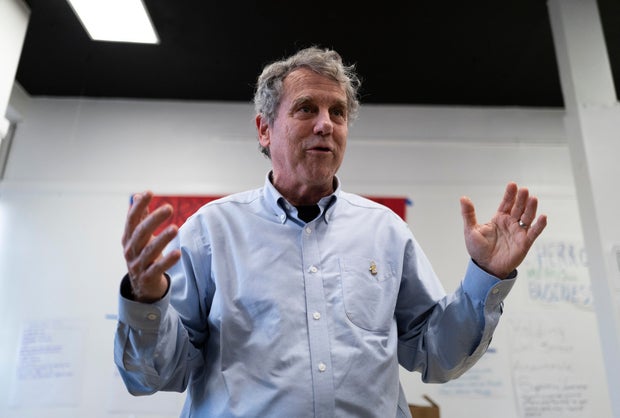
Sen. John Husted is defending the seat after he was appointed to fill the vacancy left by Vice President JD Vance last year. Husted previously served as Ohio’s lieutenant governor.
Ohio’s 2024 Senate race was the most expensive of the cycle, and this time around the Senate contest is also shaping up to be costly. The race marked the Senate Leadership Fund’s largest ad reservation, with a $79 million investment.
The Cook Political Report shifted its rating from leaning Republican to a toss-up in April.
Alaska: Dan Sullivan defends against challenge by former Rep. Mary Peltola
GOP Sen. Dan Sullivan is defending his seat in Alaska amid a challenge from former Rep. Mary Peltola, who in 2022 became the first Democrat to represent the state in the House in 50 years.
Peltola, the first Alaska Native to serve in Congress, ultimately lost her reelection bid for Alaska’s sole House seat in 2024. Though the president won the state by 13 points, Peltola lost by less than three points in the race. And with midterm dynamics traditionally boosting the party opposing the White House, Democrats are hoping she can flip the seat in this year’s election.
The Senate Leadership Fund announced a $15 million investment in advertising to boost Sullivan in the race. The two-term Republican won reelection in his last race by a comfortable margin. And despite Democratic optimism, flipping the seat would be an uphill battle. The Cook Political Report rates the races as leaning Republican.
Georgia: Ossoff tries to win reelection in state Trump won in 2024
Democratic Sen. Jon Ossoff is the only Democrat seeking reelection in a state the president won in 2024, making the race a key prize for Republicans as they seek to hold onto the chamber. But a formidable fundraising effort and a messy GOP primary has appeared to improve Ossoff’s outlook.
Ossoff, 39, was elected in early 2021, delivering Democrats one of two runoff victories in the Peach State and securing their majority. But after the state provided the key Democratic victories in the 2020 elections, including supporting Joe Biden at the presidential level, the state backed President Trump in the 2024 election.
Dustin Chambers / Bloomberg via Getty Images 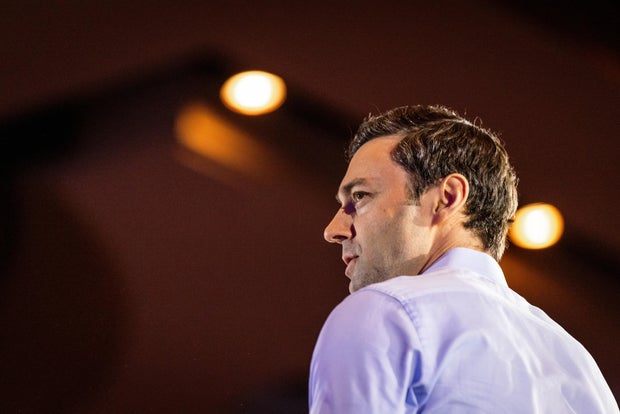
The dynamic positioned Ossoff as the most vulnerable Democratic Senate incumbent of the cycle heading into the midterm year. But the results of a special election in Georgia in April, along with what could be a prolonged GOP primary fight, have appeared to improve the picture for Ossoff. The Cook Political Report rates the races as leaning Democrat, shifting its rating from a toss-up in April.
Reps. Mike Collins and Buddy Carter, along with former college football coach Derek Dooley, are facing off in the primary, which will take place on May 19. Dooley is endorsed by Georgia Gov. Brian Kemp, but the president has yet to endorse in the race, and the primary could go to a runoff in June if no candidate reaches 50%. The Senate Leadership Fund has announced a $44 million advertising investment in the race.
New Hampshire: Former GOP senators seek open seat against Shaheen-backed Democrat
Another Democratic retirement has opened up a competitive Senate race. Sen. Jeanne Shaheen opted not to seek reelection in the Granite State, endorsing Rep. Chris Pappas as her successor. Pappas has represented New Hampshire in the House since 2019.
On the GOP side, former Sen. John Sununu, who was ousted by Shaheen, is mounting a comeback. Former Sen. Scott Brown, who represented Massachusetts in the Senate from 2010 to 2013, also launched a bid to represent New Hampshire in the Senate after falling short against Shaheen in 2014. The Senate Leadership Fund announced a $17 million investment in the race, and has backed Sununu in the Sept. 8 primary.
Although Republicans have controlled the governor’s mansion since 2017, New Hampshire hasn’t elected a Republican to Congress since 2015, and a Republican hasn’t won in the state at the presidential level since 2000. The Cook Political Report rates the races as leaning Democrat.
North Carolina: Democrats optimistic about pickup with top recruit in former Gov. Roy Cooper
GOP Sen. Thom Tillis’ retirement teed up a major contest in the Tar Heel State, where Democrats see among their best chance at flipping a seat this cycle.
North Carolina hasn’t elected a Democratic senator since 2008. But Democrats are betting on former Gov. Roy Cooper’s record as a two-term governor and the longest-serving state attorney general in North Carolina’s history. The Cook Political Report rates the races as leaning Democrat, moving its rating from a toss-up in April.
Former Republican National Committee Chairman Michael Whatley is taking on Cooper. Though he has never run for office, Whatley played a key role in Mr. Trump’s reelection effort, and has the president’s support. And Republicans are planning to spend big on the race, with a $71 million advertising investment from the Senate Leadership Fund.
Iowa: Democrats eye longshot bid after Ernst retirement
Republicans are defending an open seat in Iowa after Sen. Joni Ernt announced she wouldn’t seek reelection. The party quickly rallied behind Rep. Ashley Hinson, who’s represented Iowa in the House since 2021.The Senate Leadership Fund announced a $29 million investment in advertising reservations in the race.
Scott Olson / Getty Images 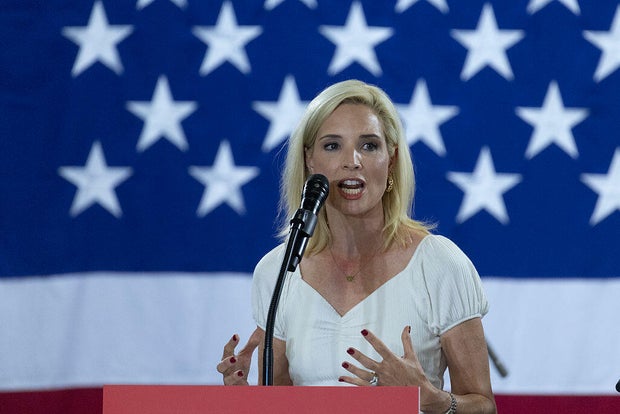
On the Democratic side, state Sen. Zach Wahls and state Rep. Josh Turek are facing off for the nomination, with the primary set for June 2. But in a state that hasn’t elected a Democrat to the Senate since 2008, and which Mr. Trump won by more than 13 points in 2024, the Democratic nominee will face an uphill battle.
Still, opposition to Mr. Trump’s tariff policy in the agriculture-heavy state could play in Democrats’ favor, and some have pointed to Auditor Rob Sand’s momentum in the governor’s race as a possible buoy for the party more broadly. The Cook Political Report rates the races as likely Republican.
Nebraska: Independent makes second attempt to unseat Republican after losing by 7 points in 2024
Independent Dan Osborn is making a second attempt to unseat a Republican incumbent to represent Nebraska in the Senate this year, after his long-shot bid ended in a closer than expected race in 2024.
Osborn lost to GOP Sen. Deb Fischer by seven points in 2024. Now, the union leader is taking on GOP Sen. Pete Ricketts.
Ricketts, the former Nebraska governor who was appointed to the Senate in 2023, is one of the wealthiest members of Congress. He easily won his bid in a special election last year to serve out the remaining two years of retiring Sen. Ben Sasse’s term.
Although Nebraska is a solidly red state, it’s also home to a large share of nonpartisan voters. If a Democratic candidate doesn’t pull votes away from Osborn, the race could be within striking distance for the independent candidate. The Cook Political Report shifted its rating in April from solid to likely Republican.
Texas: Bitter GOP primary approaches runoff as Cornyn fights to hold his seat and Democrats eye long-sought flip
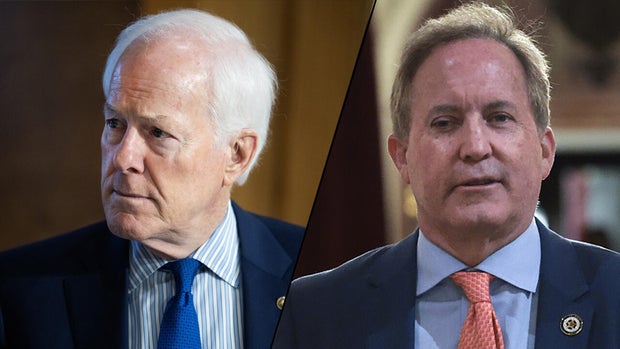
A bitter GOP primary has brought the Texas Senate race front and center, as Sen. John Cornyn fights to hold onto his seat in the chamber. The four-term senator is heading to a May 26 runoff against Texas Attorney General Ken Paxton after neither candidate secured 50% of the vote in the March 3 primary election. And despite committing to make a long-anticipated endorsement in the race to bring the GOP infighting to an end, the president has refrained from weighing in.
The runoff delays the eventual Republican nominee from turning his full attention to the general election, when one of the candidates will take on Texas state Rep. James Talarico. The moderate Democratic nominee is chasing a long-sought party dream of flipping a Senate seat in Texas. But the Lone Star State hasn’t elected a Democrat to represent Texas in the Senate since 1988.
Senate GOP leaders have long backed Cornyn in the race, but the Senate Leadership Fund has yet to announce an advertising investment in the state. The Cook Political Report rates the races as likely Republican.
Minnesota: ICE crackdown hangs over race after Renee Good and Alex Pretti deadly shootings
After Sen. Tina Smith opted not to seek reelection, Rep. Angie Craig and Minnesota Lt. Gov. Peggy Flanagan are facing off for the Democratic nomination. While party leaders have largely backed Craig, prominent progressive have endorsed Flanagan. The primary is set for Aug. 11.
On the GOP side, a number of Republicans are vying for the nomination, including Michele Tafoya, a former sports broadcaster, former Minnesota state Sen. David Hann, former NBA player Royce White and Adam Schwarze, a retired NAVY Seal.
Minnesota hasn’t elected a Republican to the Senate since 2002 and the GOP hasn’t carried the state in a presidential election since the 1970s. And front of mind for the state heading into the midterms will all but certainly be the deadly shootings of Renee Good and Alex Pretti by federal agents in Minneapolis during the immigration crackdown in January. The Cook Political Report rates the races as likely Democrat.