Washington — As fallout from the war with Iran keeps fuel prices high, few states are making moves to suspend their gas and diesel taxes.
Tax policy experts say suspending the state and federal motor fuel taxes wouldn’t be as effective in lowering prices at the pump as one might think, and could come at a cost to the roads and bridges that drivers depend on.
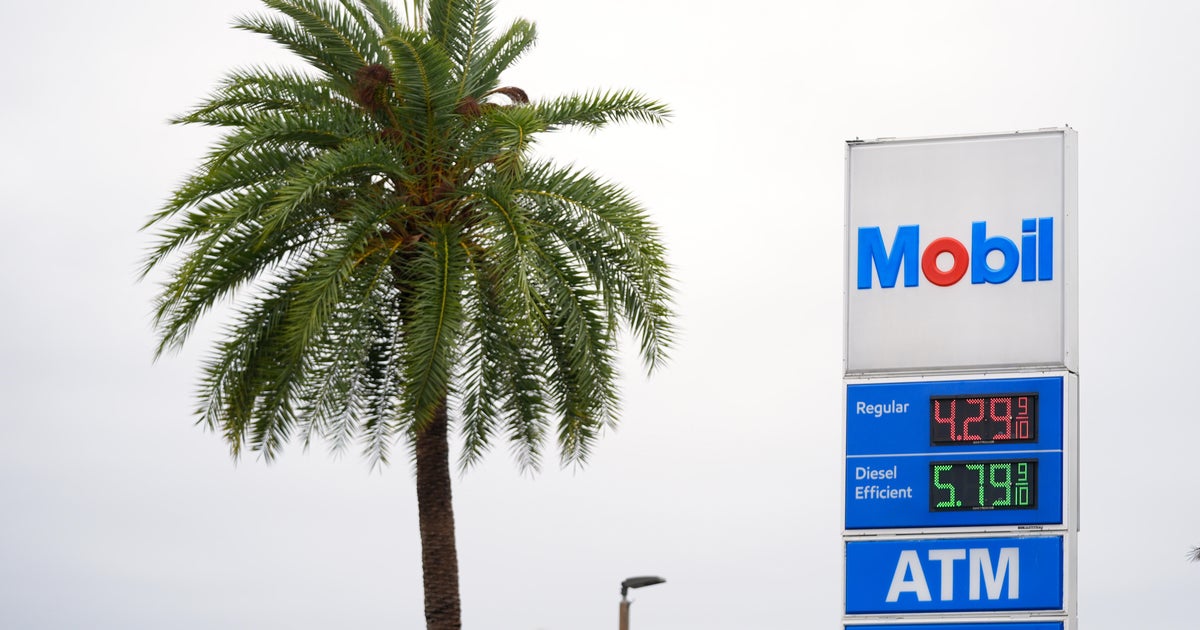
The average state gas tax is 32.6 cents per gallon, according to the U.S. Energy Information Administration. The average gas price in the U.S. on Wednesday was $4.11, according to AAA, and 51% of respondents in a recent CBS News poll said gas prices have posed a financial hardship or been financially difficult for them.
Only a few states have taken steps to mitigate their motor fuel taxes since the conflict in the Middle East began. Georgia became the first state to suspend its motor fuel tax last month, with Republican Gov. Brian Kemp signing a 60-day suspension on the state’s 33-cent-per-gallon gas tax and 37-cent-per-gallon diesel tax. On April 8, Indiana’s Republican Gov. Mike Braun issued an executive order for a 30-day suspension of that state’s 7% gasoline sales tax. And Utah temporarily reduced its state fuel tax, but only by 6 cents on the gallon, bringing its state gas tax to 32 cents on the gallon for the remainder of 2026.
Kemp, who signed the gas tax suspension as a part of a bill sending state income tax refunds back to taxpayers, said he was proud to “deliver meaningful tax relief” to Georgians. Georgia House Speaker Jon Burns said the gas tax suspension would save drivers “nearly $400 million over the next 60 days.”
But most states have been hesitant to suspend their taxes, even as drivers are feeling more pain at the pump. The federal government isn’t making moves to suspend the federal 18.4-cent gas tax or 24.3-cent diesel tax either, which would require an act of Congress.
Lawmakers and governors have good reasons for being reluctant, tax policy experts said.
“The bottom line is it’s an expensive gimmick,” said Carl Davis, research director at the Institute on Taxation and Economic Policy. “If the goal is to get tax cuts into the hands of working-class, middle-class drivers, it’s mostly going to miss the mark.”
Appearing on “Face the Nation with Margaret Brennan” earlier this month, Maryland Democratic Gov. Wes Moore declined multiple opportunities to say he’s open to suspending the state’s 47-cent-per-gallon gas tax. He argued the real problem is the war and the uncertainty it brings, and said he expects gas prices to remain elevated once the war ends.
“Band-Aids don’t fix potholes,” said Adam Hoffer, director of excise tax policy at the Tax Foundation. For drivers worried about high fuel prices, “this isn’t going to solve any of the problems,” he said.
Davis explained that gas taxes aren’t like a sales tax — suspending them won’t directly pass all of the savings to the consumer.
“The evidence suggests that with these short-term gas tax changes, some of the cut will get to drivers and some of it won’t,” Davis said. “Some of it will be retained along the way by the oil and fuel industries.”
A 2022 Penn Wharton study analyzing temporary fuel tax holidays in Maryland, Georgia and Connecticut found that drivers saw a chunk of the tax cut — but not all of it. In Maryland, 72% of the tax cut was passed on to consumers. In Georgia and Connecticut, the figure was 62% and 71% respectively. The rest was presumed to be absorbed by fuel wholesalers or distributors who pay the gas tax to the federal government. When the tax is suspended, they can choose to keep some of the money they’re saving rather than lowering prices at the pump.
Gas and diesel taxes are essentially a “user fee” for roadways, policy experts say — in other words, the people using the roads are the ones who pay the taxes and benefit from them. Without the taxes, it’s drivers who would ultimately see the downside. Road improvement projects could be placed on hold or significantly delayed. Potholes may go unfilled, Davis said, and drivers may have to make unplanned trips to the mechanic shop to fix their tires as a result.
“Gas taxes are the single most important way that states pay for transportation infrastructure, so when those taxes are suspended that takes a huge bite out of the funds states use to keep our bridges safe and our roads in good repair,” Davis said. “That’s not something drivers should be excited about.”
The Institute on Taxation and Economic Policy estimates the state of Georgia will lose about $399 million in revenue over its 60-day suspension, and that the bottom 60% of earners in Georgia will save only $13 a month.
“The gas tax is benefitting them very directly in the form of road maintenance, bridge repair, expansions of the transportation network and so on,” Davis said. “These things that the gas tax pays for are what make it possible to drive at all and have a safe, efficient, enjoyable drive.”
Many states are already drawing upon other revenue sources to fund road projects and can’t afford to get rid of the tax, Hoffer said. States may have to pull resources for roads from other areas, like school funding, Davis said.
“Most states aren’t able to fully fund their transportation systems with transportation user fees as it is,” he said.
“The system isn’t fully supporting itself right now,” Hoffer said, and suspending the gas tax “is only going to make that problem worse.”
Further, Davis said, state gas tax holidays also mean revenue is not collected from out-of-state drivers. States keeping an eye on their budgets aren’t keen to give up revenue to help passersby and commercial drivers.
With the exception of out-of-state travelers, these considerations with suspending state taxes are “mirrored almost exactly to the federal level as well,” Hoffer said. The federal gas tax money goes directly into the federal Highway Trust Fund, which, just like others, is gradually becoming underfunded, Hoffer said.
“I think that’s the reason why we’re not seeing a federal proposal at this time,” Hoffer said.
Former President Joe Biden proposed a federal gas tax holiday in 2022 when gas prices were high, but congressional Democrats dismissed the idea. During the financial crisis in spring 2008, then-candidate Barack Obama dismissed his rivals’ calls for a federal gas tax suspension.
“Well, let me tell you, this isn’t an idea designed to get you through the summer, it’s designed to get them through an election,” Obama said at the time.
Even if the taxes were suspended, their reinstatement could hit drivers at a bad time, and no one likes to see taxes go up again, Hoffer said.
“The timing could be really poor depending on how long the suspension lasts,” Hoffer said. “The really heavy summer travel season is ahead of us.”
Higher gas prices will likely be a longer-term issue. The EIA expects gas and diesel prices to remain higher than previously projected into 2027. In January, before the war with Iran began, the EIA anticipated national gas prices to average $2.95 per gallon in 2027. Now, it projects gas prices will be $3.46 per gallon on average in 2027.
“This is kind of a no-win policy, as much as opponents of the gas tax would like to see it go away,” Hoffer said.