
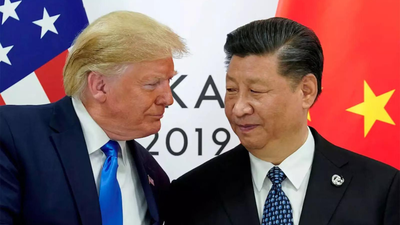
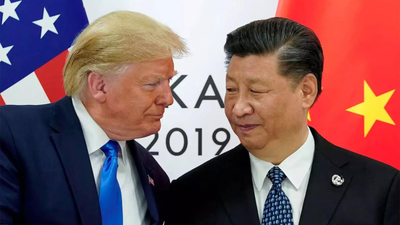
China on Saturday opposed the United States for adding several leading Chinese companies, including BYD, Alibaba and Baidu, to a Pentagon list of firms alleged to have links with the Chinese military, arguing that the move undermines understandings reached during last month’s summit between US President Donald Trump and Chinese President Xi Jinping.This comes despite Trump’s recent visit to Beijing, where he was accompanied by a high-profile delegation of US business leaders, including Boeing executives, Nvidia chief Jensen Huang and Elon Musk, as Washington and Beijing sought to improve economic ties and explore new trade and investment agreements.According to AP, China’s Ministry of Commerce said Washington had ignored the consensus reached by the two leaders and was harming bilateral economic and trade relations.The Pentagon earlier this week added electric vehicle maker BYD and technology giants Alibaba and Baidu to its list of Chinese military companies. Inclusion on the list can prevent firms from securing US defence contracts.By adding the companies, “the US side has ignored the consensus reached during the meeting between the heads of state of the two countries in Beijing,” a Chinese Commerce Ministry spokesperson said in a statement.The spokesperson added that the US had “disregarded the overall interests of bilateral economic and trade relations, continuously generalized the concept of national security, and abused state power to unjustifiably suppress Chinese enterprises.”The latest dispute comes weeks after Trump travelled to Beijing for a closely watched summit with Xi.During the meeting, the two leaders agreed to strengthen economic engagement, including China’s purchases of US agricultural products and Boeing aircraft, while also establishing separate trade and investment boards.BYD, Alibaba and Baidu have previously said there is no basis for their inclusion on the Pentagon’s list.The move is the latest sign of continuing friction between Washington and Beijing despite recent efforts by both sides to stabilise economic ties.On May 13, Trump visited Beijing where he held talks with Xi Jinping aimed at improving economic and trade ties between the world’s two largest economies.Trump was accompanied by a delegation of leading US business executives, including Boeing representatives, Nvidia chief Jensen Huang and Elon Musk. During the visit, the two sides discussed trade, investment and market access, while exploring potential Chinese purchases of Boeing aircraft and other US goods.Following the summit, Chinese Foreign Minister Wang Yi said the two countries had agreed to establish trade and investment boards, address concerns over agricultural market access and promote expanded trade under a framework of reciprocal tariff reductions. The Pentagon’s latest move, however, suggests that security and technology disputes continue to weigh on efforts to stabilise bilateral relations.