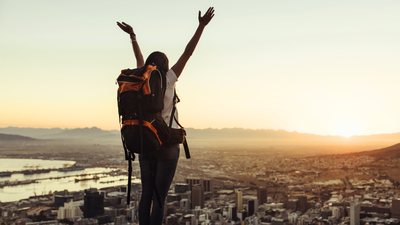
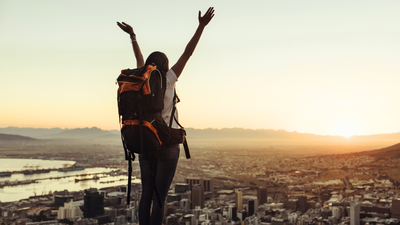
For many people, travelling alone still sounds intimidating. Solo travellers are often stereotyped as lonely, restless or simply trying to escape everyday life. Solo travel, however, has become increasingly popular, especially among younger generations who are choosing to explore the world on their own. From Gen Z backpackers to millennials taking annual trips, more people are embracing the freedom that comes with travelling solo. Psychology and tourism research suggest this growing trend is about much more than wanderlust. Studies on personality, autonomy and solitude show that people who regularly travel alone often share certain psychological tendencies. They value freedom, adapt well to change and see unfamiliar experiences as opportunities rather than obstacles.
8 personality traits psychology says solo travellers share
Solo travellers are comfortable with uncertaintyMost people prefer certainty. Solo travellers often have to accept that things will not always go according to plan. Flights are delayed. Reservations fall through. Weather changes unexpectedly. For many regular solo travellers, these moments become part of the experience rather than reasons to panic.Psychologists refer to this ability as tolerance of ambiguity. Research by American psychologist Stacy McLain and work later cited by the OECD found that some individuals are naturally better at dealing with unfamiliar and uncertain situations. Instead of seeing unpredictability as stressful, they view it as manageable.This does not mean they enjoy chaos. It simply means they are less likely to become overwhelmed when things do not unfold perfectly.They value autonomy more than social approvalOne of the strongest themes in solo travel research is autonomy. Psychologists Edward Deci and Richard Ryan built self-determination theory around three core psychological needs: autonomy, competence and relatedness.A 2025 study by researcher Claire Dresler on solo female travellers found that many people are drawn to solo travel because it gives them a sense of control over their experiences. They enjoy making decisions without constantly having to compromise.Interestingly, researchers found that solo travellers are not avoiding people. Many enjoy meeting others along the way. They simply place greater value on personal freedom and self-direction.They score high on openness to experienceCuriosity is one of the traits most often linked with travel. According to the Big Five personality model, openness to experience is associated with creativity, imagination and a desire to explore.Tourism researcher Dev Jani found that openness is strongly related to travel curiosity. People with this trait are naturally attracted to different cultures, unfamiliar foods and new ways of thinking.A 2013 study led by German psychologist Jule Specht produced an interesting finding. People who spent time abroad became more open to new experiences over time. Travel did not just attract curious people. It appeared to make them even more curious.They enjoy solitude without feeling lonelyOne of the biggest misconceptions about solo travellers is that they are lonely. Researchers say loneliness and solitude are not the same thing.Late social neuroscientist John Cacioppo spent years studying loneliness and found that being alone does not automatically lead to negative emotions. Psychologist Netta Weinstein and her colleagues later showed that people who voluntarily spend time alone often experience lower stress and greater autonomy.Many solo travellers have close relationships and active social lives. They simply do not need constant companionship to feel fulfilled. Being alone feels peaceful rather than uncomfortable.They are psychologically flexibleNo trip unfolds exactly as planned. Delays happen. Mistakes happen. Solo travellers often become skilled at adapting because they have no choice.Psychologist Steven Hayes, one of the founders of Acceptance and Commitment Therapy, introduced the concept of psychological flexibility. It refers to the ability to adapt to changing situations without losing sight of what matters most.Studies have linked psychological flexibility to greater wellbeing and resilience. Solo travel provides endless opportunities to develop this skill. Over time, travellers become more comfortable handling setbacks and adjusting to new circumstances.They build confidence through experiencePeople often assume that only confident individuals travel alone. Psychologist Albert Bandura’s work suggests the opposite.Bandura introduced the concept of self-efficacy, which refers to a person’s belief in their ability to handle challenges. According to his research, confidence grows through mastery experiences. Every problem solved and every obstacle overcome strengthens self-belief.Solo travel offers countless examples. Navigating a foreign city. Finding accommodation. Dealing with missed connections. Communicating despite language barriers.Many experienced solo travellers say they became confident because they travelled alone. Confidence was not necessarily the starting point.They are drawn to novelty and learningScientists have long connected openness with novelty-seeking behaviour. Recent neuroscience research suggests that openness is linked to brain networks involved in exploration and learning.This may explain why solo travellers often enjoy wandering through unfamiliar neighbourhoods, visiting museums or talking to strangers in cafes. They are not always looking for adrenaline. Many are simply seeking new experiences and fresh perspectives.Researchers have found that novelty stimulates attention and memory. That may be one reason why travel experiences often stay with people for years.They are more introspective than extrovertedPeople often picture solo travellers as outgoing adventurers who make friends wherever they go. Research suggests many are simply reflective individuals who enjoy spending time with themselves.Studies on positive solitude show that time alone creates opportunities for self-reflection and personal growth. Travel psychologist Dr Natalie West says travelling alone temporarily removes people from their normal routines and social expectations. That space allows them to think more deeply about what they value and who they are.For many solo travellers, the inner journey becomes just as meaningful as the destination itself.The biggest surprisePsychology does not paint solo travellers as lonely outsiders. Research points to something far more interesting. People who regularly travel alone tend to be curious, adaptable and comfortable with themselves. They value autonomy and build confidence through experience. They are often open to new ideas and surprisingly good at dealing with uncertainty.Perhaps that is why solo travel has become so popular among younger generations. It is not necessarily about escaping from life. For many people, it is about discovering more of it.