One issue will decide Steven Cohen’s vote for Nevada governor this fall: Which candidate can best protect him from getting kicked off Medicaid?
Cohen is a 38-year-old Las Vegas resident with autism and has dual enrollment in Medicaid and Medicare. He said he’s very concerned that he could lose his Medicaid coverage once work requirements and more frequent eligibility checks take effect in January, under congressional Republicans’ One Big Beautiful Bill Act.
“When you’re going to some providers, notably mental health, once a month, or in the case of one provider, a couple of times a week, those copays quickly add up,” Cohen said.
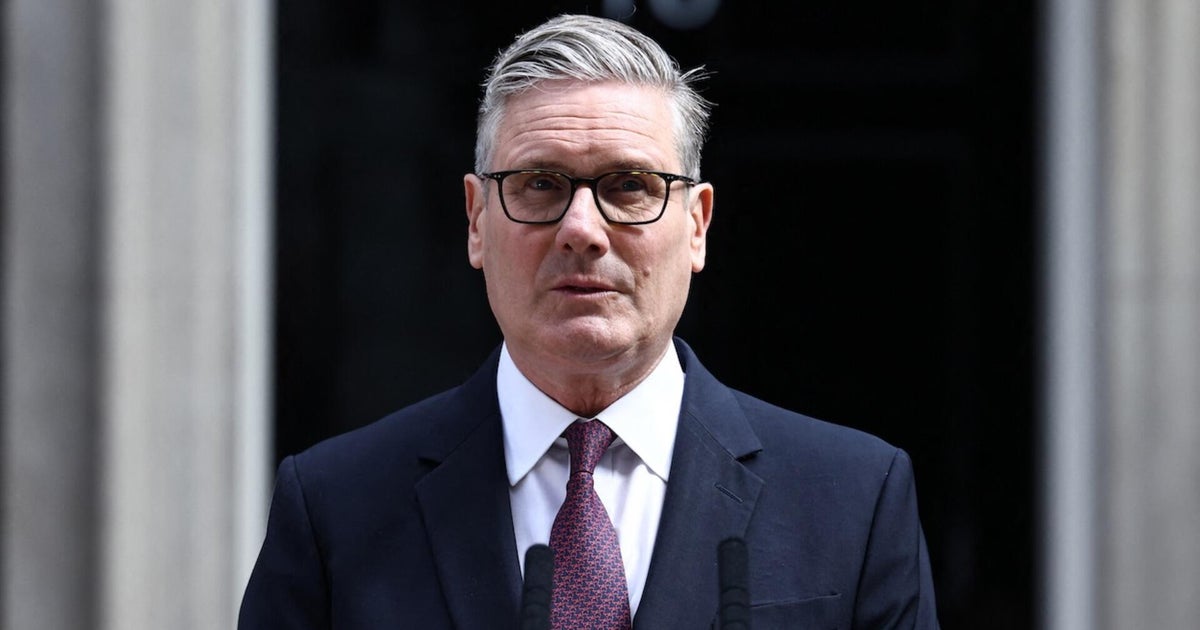
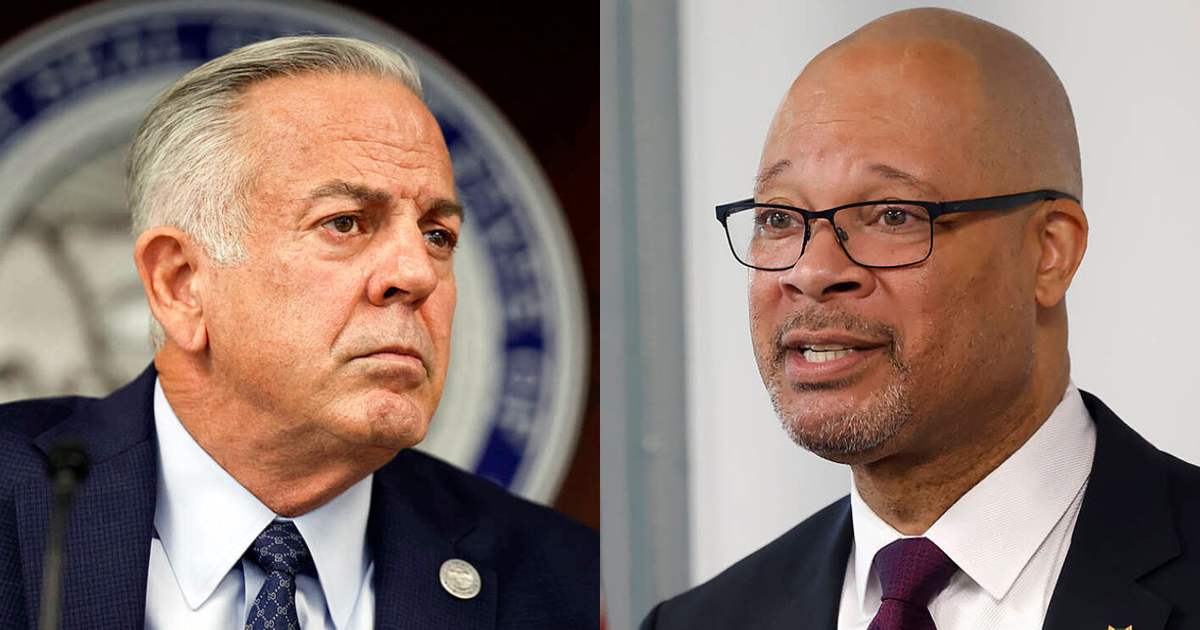
Republican Gov. Joe Lombardo is running for reelection in a tight race against Democratic state Attorney General Aaron Ford in one of 39 U.S. gubernatorial elections to be decided in November. Lombardo has President Trump’s endorsement, but healthcare policy changes made by the Trump administration are working against him with voters like Cohen in the swing state.
Those changes include Medicaid funding cuts that are expected to strain state budgets, along with new work requirement and eligibility rules for Medicaid and the Supplemental Nutrition Assistance Program, which provides food assistance for low-income families. The changes are expected to increase the number of people without health insurance nationwide by an estimated 7.5 million in 2034 and decrease the number of people who receive SNAP by 2.4 million people in an average month from 2025 to 2034.
People across the U.S. have also been feeling the pinch of rising health insurance premiums since Congress allowed enhanced Affordable Care Act subsidies to expire at the end of last year. Many who purchase health plans on the ACA marketplace have chosen less expensive plans with less coverage or are going without insurance altogether.
These changes will have a significant impact in Nevada, where tourism, hospitality, and gaming are cornerstones of the state’s economy. Nearly 300,000 people in Nevada are self-employed, independent contractors, or freelancers without employer-sponsored health insurance benefits. Many purchase insurance through the state’s ACA health exchange, which saw a 5.5% decrease in enrollment this year after a record 110,000 people signed up for 2025.
Even before the federal changes, Nevada’s 11.4% uninsurance rate was already the fourth-highest in the nation, according to data from 2024. A state Medicaid official told lawmakers in May that an estimated 70,000 Nevadans could lose their Medicaid coverage under the new rules. Around 28,000 people in the state lost access to SNAP in May.
“This is going to come down to an affordability election, and that’s going to hurt the Republicans,” said David Damore, a professor in the political science department at the University of Nevada-Las Vegas.
In a national KFF poll this year, two-thirds of respondents said they were worried about affording healthcare, more than the share who said the same about food and groceries, housing, or gas. And more than half said their healthcare costs had increased in the past year. KFF is a health information nonprofit that includes KFF Health News.
While most respondents said that healthcare costs will influence whom they vote for in November, the issue was more pressing among Democrats and independents.
Competitive gubernatorial races are also underway in Arizona, Georgia, Iowa, Michigan, and Wisconsin, with all those races considered toss-ups.
The Democratic Party has the edge on healthcare issues over Republicans, but about 3 in 10 voters reported that they don’t trust either party, noted Liz Hamel, a senior vice president and the director of public opinion and survey research at KFF.
“It’s not an overwhelming advantage,” she said.
Not your textbook Republican governor
Lombardo’s campaign has touted his support for a children’s hospital set to be built in Las Vegas; his consolidation of the state’s Medicaid program, ACA marketplace, and public employee benefits program into a single agency; and the expansion of the number of community behavioral health centers in the state during his term.
Before running for governor and unseating Democrat Steve Sisolak in 2022, Lombardo served eight years as sheriff in Nevada’s Clark County. Before that he spent 26 years with the Las Vegas Metropolitan Police Department.
Lombardo has taken healthcare stances in his first term that diverge from the typical Republican playbook. For example, he said in 2022 that he would oppose a national abortion ban, and in 2023 he signed into law a Democratic-led bill prohibiting state agencies from cooperating with other states seeking to prosecute people for traveling to Nevada to get an abortion.
The governor also signed bills into law in 2023 that prohibit insurance companies from engaging in gender discrimination and require state correctional facilities to ensure greater protections for transgender and nonbinary people, including setting standards for medical care and mental health treatment.
More recently, Lombardo has taken actions more aligned with the Make America Great Again movement. In 2025, he vetoed a bill that would have created protections for clinicians who provide gender-affirming care. This year, he endorsed a proposed constitutional amendment to ban transgender athletes from girls’ and women’s sports.
Lombardo’s campaign declined to make the governor available for an interview for this report. In a March interview with Jon Ralston, CEO of the nonprofit news outlet The Nevada Independent, Lombardo said he was surprised during his first term as governor by how “complicated” and “encompassing” healthcare is, and by the “cost of it.”
“Government seems to complicate some of those bigger processes more often than not,” Lombardo said, “but in this case, they’re instrumental in the success or failure of healthcare and how people suffer as a result of bad decisions.”
His opponent, Ford, began his political career as a Nevada state senator and became the state’s first Black attorney general in 2019.
Ford has talked about how he raised his eldest son on his own while attending Texas A&M University. He said he relied on public benefits such as Section 8 housing, Medicaid, food stamps, and the Women, Infants and Children program to provide for them.
He said because of those experiences, his thoughts go to the Nevadans expected to lose Medicaid coverage whenever he hears a reference to the “Big Beautiful Bill.”
“It hits me differently,” Ford said.
His campaign’s “Affordable Nevada” plan calls for lowering prescription drug costs, boosting awareness of the state’s public-option health plans that debuted this year, and canceling medical debt.
A referendum on Trump?
Most voters who responded to KFF’s poll said they have little or no confidence in how the Trump administration is addressing the cost of living.
“It seems like, if anything, the Trump administration’s approach is not going to help Republicans in the midterms,” Hamel said. But, she added, “November is many months away. A lot of things could change.”
Lombardo appears to be distancing himself from the president amid soaring gas prices and broader affordability issues.
When Trump visited Las Vegas in April, Lombardo didn’t attend the event. The governor later issued a statement that he would be meeting with the president during his visit, but Politico reported they spoke only by phone. Damore said he doesn’t think it was an accident that Lombardo didn’t appear with the president publicly.
“Lombardo has done a nice job trying to thread the needle between himself and Trump,” he said.
But Ford has an easier road ahead when it comes to campaigning for healthcare issues, Damore said.
“He just kind of has to say, ‘I’ll do better,’ and point the finger at Trump and say, ‘Where is Lombardo fighting this kind of stuff?'” Damore said. “That’s a pretty easy campaign for him.”
Partisan Nevada voters are nearly evenly split between the two parties, but the majority are registered as nonpartisans, probably because the state’s automatic voter registration program makes “nonpartisan” the default option for residents who register at the Department of Motor Vehicles. As of last year, voters can no longer choose a party at the DMV, instead needing to fill out paperwork their county election office mails after they register.
Clark County, home to Las Vegas and nearly three-quarters of Nevada’s population, leans Democratic. The next-largest county by population is Washoe County, which is home to Reno and is the only swing county in the state. The rest of the state is rural and consistently votes Republican.
But voters in Nevada are fatigued, Damore said, after years of inflation and rising costs since the COVID-19 pandemic.
“People are just kind of surly,” he said. “They keep kind of ping-ponging back and forth between the parties. It doesn’t seem to change much.”
Cohen, the Las Vegas voter, is a registered nonpartisan. He said he plans to vote for Ford because he is the candidate who seems most willing to work to protect Medicaid enrollees.
“Sometimes the only way to get something done, to protect it, is to sue,” Cohen said. “I think he’ll bring that background.”
Are you struggling to afford your health insurance? Have you decided to forgo coverage? Click here to contact KFF Health News and share your story.
KFF Health News is a national newsroom that produces in-depth journalism about health issues and is one of the core operating programs at KFF — the independent source for health policy research, polling, and journalism.