
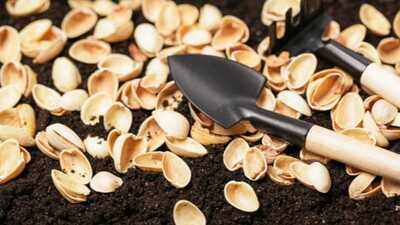
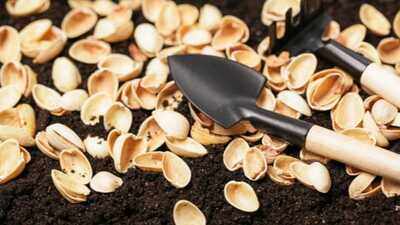
Pistachios are one of those snacks that leave behind a genuinely satisfying pile of shells by the time the bowl is empty, and most of that pile ends up straight in the bin without a second thought. But those tough, woody shells have quietly earned a following among gardeners, who’ve found several practical ways to put them back to work in the soil instead of the landfill. If your shells are salted, it’s worth giving them a quick rinse first, since leftover salt can build up in soil and stress plant roots over time. Here are five smart ways to reuse pistachio shells in the garden.
A natural drainage layer at the bottom of pots
Pistachio shells work remarkably well as a drainage layer at the bottom of potted plants, and a layer of about one to two inches beneath the potting mix helps stop soil from sitting in excess water and causing root rot. They function much like the gravel or broken pottery gardeners traditionally use for this purpose, but with one real advantage, using them as a filler at the base of large planters also cuts down on how much potting soil you need to buy, which adds up quickly for bigger pots. Unlike gravel, the shells eventually break down on their own, so there’s nothing to sift out the next time you repot.
Long-lasting mulch for moisture and weed control
Spread in a layer around the base of plants, pistachio shells work as a surprisingly durable mulch. They help insulate plant roots and regulate soil temperature, keeping things cooler in summer and warmer in winter, while breaking down slowly enough to stay effective as ground cover for an entire season. Because the shells are so much tougher than typical organic mulch like straw or shredded leaves, they resist compacting or washing away in heavy rain, and they suppress weed growth simply by blocking light from reaching the soil underneath. As they do eventually decompose, they add a bit of organic matter back into the bed.
A barrier against slugs, snails, and digging pests
The same toughness that makes pistachio shells good mulch also makes them useful as a pest deterrent. Slugs, snails, and other soft-bodied pests tend to avoid crossing a layer of crushed pistachio shells, since the rigid texture and sharp ridges are uncomfortable for them to move across, working on a similar principle to crushed eggshells or diatomaceous earth. Spreading a thicker layer as a top dressing around outdoor plants can also help deter squirrels, chipmunks, and raccoons from digging around in the soil, which is a handy bonus for anyone whose potted plants keep getting disturbed.
A carbon-rich addition to your compost bin
Even shells you don’t have an immediate use for don’t have to go to waste. Pistachio shells function as a carbon-rich “brown” material in a home composting system, helping balance out nitrogen-heavy kitchen scraps, though full decomposition can take over a year unless the shells are crushed into smaller pieces first. Crushing them before adding them to the compost pile speeds things up considerably and helps them blend in more evenly with the rest of the material. It’s a low-effort way to keep shells out of household waste while slowly building richer, more balanced compost.
A soil conditioner for heavy or compacted soil
For gardens dealing with dense, clay-heavy soil, crushed pistachio shells can genuinely help loosen things up. Working the shells into compacted soil creates small air pockets that let water move more freely through the ground, reducing the waterlogging that heavy soils are prone to. This makes root development noticeably easier for plants that otherwise struggle in dense conditions. It’s worth keeping in mind that the shells are slow to break down and stay visible in the soil for a while, so this works best in beds where a slightly rustic, textured look isn’t a problem.
Small shell, genuine garden value
None of these uses requires anything beyond shells you’d otherwise throw away and a little patience, since pistachio shells take their time breaking down compared to softer organic material. Whether it’s better drainage, a longer-lasting mulch, or a bit of pest protection, there’s real, practical value sitting at the bottom of that snack bowl. The next time you finish a pack of pistachios, it might be worth setting the shells aside for the garden instead of the bin.
Disclaimer:
This article is intended for general informational purposes only. Always rinse salted pistachio shells thoroughly before using them in soil to avoid salt buildup harming plant roots, and use caution when crushing shells, as broken edges can be sharp. Keep shells out of reach of pets that may be tempted to chew on them. For advice specific to your soil type or plants, consult a local nursery or gardening expert.