
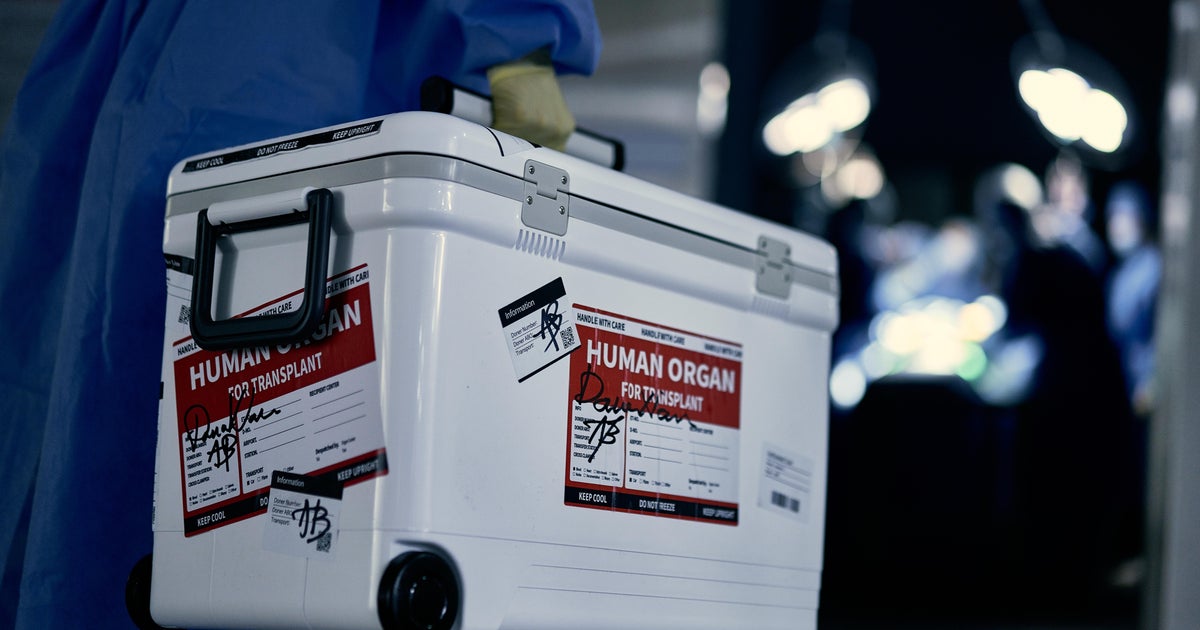
When Raven Kinser walked into a Virginia Department of Motor Vehicles office two summers ago, she checked a box on her driver’s license application indicating she did not want to donate her organs in the event of her death, reversing her earlier donor registration. Six months later, after she was declared dead at Riverside Regional Medical Center in Newport News, Virginia, her parents say, they found out that the checked box didn’t matter.
Raven’s case reveals a little-known gap in the U.S. donation system: There is no clear, nationally binding way to opt out — or to ensure a later “no” overrides an earlier “yes” in a different state.
This gap, along with a range of other issues related to the organ procurement system, has become a point of bipartisan congressional concern. Late last year, the House Ways and Means subcommittee on oversight held a hearing examining what members described as shortcomings, including alleged consent failures.
The panel’s scrutiny of organ procurement organizations, or OPOs, and their consent practices is a first step toward a more meaningful accountability plan that could help maintain trust across the system, according to some committee staff members.
The trust in our organ procurement and transplant system “has been eroded,” said Rep. Terri Sewell of Alabama, the panel’s senior Democrat, calling for stronger transparency and oversight to rebuild public confidence.
“Respect for autonomy — our ability to make our own decisions (self-determination) – allows for both ‘yes’ and ‘no’ decisions and for changing one’s mind,” Margaret McLean, a bioethicist at Santa Clara University, said in an email.
“Medical decision-making is not well served in a context of ambiguity,” she said.
And if a donor revokes consent, she added, “revocation by that person should carry the same ethical and procedural weight as the initial authorization, perhaps more.”
Raven Kinser changed her mind
Raven was 25 when she died. Her parents, Jeff and Jaime Kinser, were at home in Michigan when they received the phone call that shattered their world. They drove through the night to the Newport News hospital, where they learned Raven’s disposition had been referred to LifeNet Health, the region’s federally designated OPO. LifeNet is rated a failing OPO by the Centers for Medicare & Medicaid Services, meaning it doesn’t meet the government’s standards for how well it finds donors and recovers usable organs for transplant compared with other organizations.
Under federal law, hospitals are required to refer deaths and imminent deaths to OPOs, which take responsibility for donation-related decisions and discussions.
OPOs occupy a hybrid position in the health care system, as private nonprofit entities that hold exclusive, federally authorized contracts to recover organs within defined regions. They are regulated by CMS and overseen by the Health Resources and Services Administration, but that oversight occurs primarily through certification standards, performance metrics, and periodic audits rather than routine public disclosure requirements. With donor registries largely managed at the state level and no unified federal reporting requirement for removals, comprehensive national data on revocations is elusive.
OPOs are meant to separate bedside care from organ procurement decisions — to help prevent conflicts of interest and preserve the trust that decisions about life-sustaining treatment are made solely in the dying patient’s interest. But the policy can be fraught, leaving families unsure who is in control if and when conflicts arise.
The Kinsers, for instance, felt their daughter would not have wanted to go through the donation process, but, at the time, had no evidence. Jaime remembers telling her husband that Raven would have been mad at them for letting it happen. In an effort to stop it, Jaime inquired about whether she would be asked to sign a consent form. But a LifeNet staff member told her that wasn’t an option because donation was Raven’s “living will,” Jaime said. Meanwhile, Raven’s parents said, her personal effects, including her Virginia driver’s license, which bore no donor designation, had not yet been turned over to the family, leaving them no meaningful way to challenge LifeNet’s determination in real time.
Jaime struggled with this outcome, even mentioning in Raven’s obituary that she was an organ donor. “How would you try to make peace with something that you felt was so wrong but had no proof?” Jamie said.
Two months passed before the Kinsers gained possession of the license, which, as they had expected, showed that Raven had not opted to be an organ donor.
According to the Kinsers, LifeNet staff told them that Raven’s status as a registered donor was established by her designation on her older Michigan license.
According to an emailed statement attributable to Douglas Wilson, LifeNet Health executive vice president, that the OPO follows federal law on organ donation, the Uniform Anatomical Gift Act, and queries applicable state donor registries, relying on time stamps and governing law to determine the most recent, legally valid expression of intent. Under that framework, a prior donor authorization remains enforceable unless a valid revocation is recorded in the regional OPO’s donor registry.
Because of privacy laws, Wison said, LifeNet could not comment on the specifics of any individual case.
Raven Kinser’s choice not to be a donor when she applied for a Virginia license in July 2024 was not reflected in the registry LifeNet consulted, according to her parents, who said that is what the organization told them. According to Lara Malbon, executive director of Donate Life Virginia, which manages the state’s organ donor registry, if someone changes their donor status while completing a Virginia driver’s license or ID transaction, “that information is sent to our registry, and the registry is updated daily to reflect those changes.” Malbon also said Virginia’s registry includes only people who have “affirmatively said ‘yes’ to becoming an organ, eye, and tissue donor, and it retains records solely for those who have made that decision.”
The Kinsers said they were never told which registry LifeNet consulted, why Raven’s Virginia DMV record was insufficient, or how an older “yes” from Michigan could outweigh a newer “no” in Virginia.
In December, the Kinsers filed a complaint with the Health Resources and Services Administration, urging federal regulators to investigate LifeNet’s actions and require OPOs to provide families with documented proof of the donor’s current status at the time of referral. They also called for OPOs, which operate as federally designated regional monopolies but are structured as private nonprofits, to be made subject to public records laws.
When opting out doesn’t stick
Such confusion is not unique to the Kinser family. It is a consequence of the organ donation consent process in the United States.
“I have also wondered that: why there’s not just one” registry for organ donation, Jaime said. “If you go to get a firearm, you have one federal place.”
Here’s how the system works: Americans typically register their organ donation intentions when they apply for driver’s licenses through state DMVs, and that decision remains governed largely by state law. That has led to 50 different sets of rules and very little federal regulation of what has become an over $5 billion industry in the U.S.
In some states, a donor checkbox is a binding legal document. In other states, the same choice may have different rules about when it takes effect, what it covers, and how it can be revoked.
Those differences can be big. State rules determine whether a person’s “gift” is limited to transplantation or also includes research and education. They determine whether the donation authorization includes tissue. And they can determine what counts as a valid revocation and when it is legally recognized.
Because of the system’s fragmentation, though, signals can cross when someone changes their mind, like Raven; it’s not always reflected from one state system to another.
Under state versions of the Uniform Anatomical Gift Act, a donor’s most recent legally valid expression of intent is meant to control.
“Personal autonomy is paramount to everything,” said Dr. Adam Schiavi, a neurointensivist who studies end-of-life decision-making. “If I say I want to be a donor, or if I say I don’t want to be a donor, that has to take precedence over everything else.”
But states differ in how revocation must be recorded and which registry is considered authoritative if someone has lived in more than one state. Those inconsistencies can create uncertainty when records conflict across jurisdictions.
“It has to be the most recent expression, not the most recent yes,” Schiavi said.
In Michigan, a change to someone’s donor status is reflected immediately in the secretary of state’s system, but only affirmative “yes” registrations appear in the registry. Removal information remains in internal motor vehicle records. In Virginia, the state registry includes only those who have affirmatively said “yes,” retaining records solely of donors, not of people who select “no,” creating potential gaps if someone believes a DMV change alone is sufficient.
Elsewhere, processes and volumes differ sharply. New Mexico updates driver records in real time but does not transmit status changes to its donor registry. Instead, donor services receive restricted search access. The state logged nearly 15,000 removals in late 2021 and almost 30,000 in 2022. Florida, which maintains formal removal records through weekly DMV data files, reported 356,161 removals in 2020, more than 1.5 million in 2023, and over 1.2 million in 2025. Kentucky processed 847,371 donor registrations from 2020 to 2025, but only 16,043 icon removals, with registry withdrawal handled separately. In 2025, more than 570,000 Texans opted into the registry, while over 31,000 individuals requested removal.
According to a federal official who asked not to be identified for fear of professional repercussions, OPOs have been highly effective at lobbying states to broaden the definition of consent and authorization — shaping how those terms are applied, whether those statuses must be renewed, and how easy or difficult it is for someone to opt out.
In subsequent correspondence with federal officials, the Kinsers have urged reforms to prevent OPOs from relying on older registry entries when a more recent state DMV record exists, and they have called for criminal penalties in cases in which consent is knowingly misrepresented. Federal regulators have not indicated whether such proposals are under consideration.
Congress takes a closer look
Ethicists have long cautioned that consent must be more than a checkbox and must remain grounded in respect for the donor-patient. In an October position paper on organ transplantation, the American College of Physicians emphasized that clinicians’ primary duty is to the patient in their care, and that maintaining trust requires transparency and safeguards to prevent conflicts of interest from blurring that “bright line.”
Advocates say those steps leave unresolved the core problem raised by the Kinser family: the lack of a clear, legally binding way for people to say “no” and for that decision to follow them across state lines.
The Association of Organ Procurement Organizations said it “supports strengthening donor registries and enhancing registry interoperability to ensure that an individual’s documented donation decision is honored.” But OPOs have also argued that current policies protect donation as a legally enforceable gift and prevent families from overriding a loved one’s “yes” in the midst of grief. They argue that stronger, more durable consent helps reduce missed donations and saves lives.
Congress and federal regulators are considering changes to the nation’s organ donation system, including how consent is recorded and what should happen when a donor changes their mind.
Sen. Ron Wyden (D-Ore.) proposed legislation last year to create new federal standards for patient safety, transparency, and oversight of organ transplants, including a formal authorization for hospital or OPO staff to pause harvesting if there is any “clinical sign of life.”
HHS press secretary Emily Hilliard said the agency is “committed to holding organ procurement organizations accountable” and to “restoring integrity and transparency” to organ donation policy, calling reforms essential to informed consent and protecting donor rights. CMS issued related new guidance March 11, but this guidance does not address the problems highlighted by the Kinsers’ case.
Critics of the organ transplant system say it is difficult for families to obtain documentation or independently verify how consent determinations were made in disputed cases.
HRSA has launched a sweeping modernization of the Organ Procurement and Transplantation Network, the national system that oversees organ allocation and transplant policy. Federal officials have described the overhaul as the most significant restructuring of the transplant system in decades, aimed at breaking up a long-standing contractor monopoly, strengthening patient safety oversight, and replacing aging technology infrastructure.
Central to that effort is modernizing the OPTN’s data systems: improving interoperability, audit trails, and transparency in how decisions are documented and reviewed. A more modern federal data architecture could make it easier to trace which registry was queried, what time stamp controlled, and how a consent determination was reached in disputed donations that span multiple states. But the modernization effort would not change the underlying state-by-state legal framework for donor authorization and what counts as a valid “no.”
Meanwhile, Donate Life America, a national nonprofit that supports state donor registries, also runs the National Donate Life Registry, a central database that allows people to sign up as organ donors directly. Unlike many DMV systems, the national registry lets people log in at any time to view, update, or remove their registration and print proof of their decision. The group is also starting a project to let participating states send registrations directly into the national system, creating one place to track donor sign-ups and removals across state lines.
Each of the proposals comes with trade-offs, and both advocates and OPOs have raised concerns about how they would work in practice.
“Just doing a dump truck dump of information is not going to do much unless you really apply it through checking and auditing,” said Arthur Caplan, a professor of bioethics at New York University’s Grossman School of Medicine. “It could be like the IRS. They don’t have to audit everybody. Just do a spot audit once in a while.”
The Kinsers aren’t opposed to organ donation itself. They celebrated Raven’s donation in her obituary, and in their complaint to federal regulators, they wrote, “We are NOT anti-organ donation, and we will never take away the gift of life our oldest daughter gave to others. However, that was not LifeNet’s choice to make.”
KFF Health News is a national newsroom that produces in-depth journalism about health issues and is one of the core operating programs at KFF — the independent source for health policy research, polling, and journalism.