

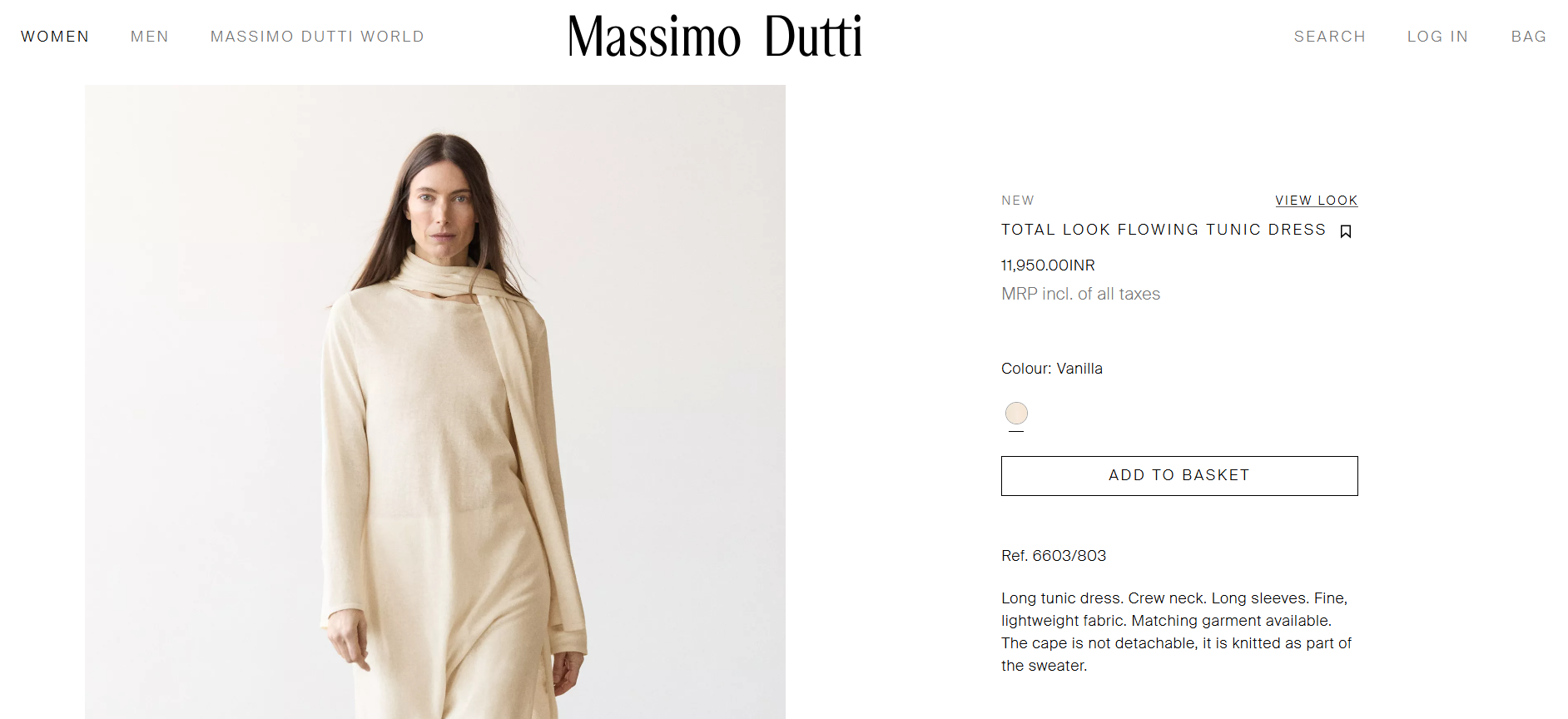
India has been the silent architect of global fashion for as long as anyone can remember, though it rarely gets the credit it deserves. From those effortless, fluid silhouettes to the kind of breathable hand-loomed textiles that feel like a second skin, India’s design DNA has quietly traveled across every ocean – only to be tucked away, repackaged under a “minimalist” label, and sold back to the world at a massive premium.The latest spark in this ongoing conversation comes from the high-street giant Massimo Dutti. The brand recently dropped what they described as a sleek “tunic dress” styled over trousers – a look that immediately hit a nerve with Indian audiences. Why? Because once you strip away the high-fashion jargon and the moody studio lighting, it looks exactly like the classic kurta-churidar combo that has lived in our wardrobes for centuries. Sometimes, they even styled it with a long scarf that, let’s be honest, is just a dupatta by another name.What really stopped people in their tracks, though, wasn’t just the uncanny resemblance – it was the price tag. Hovering around Rs 12,000, it’s a far cry from the local tailor’s rate, and that’s exactly when social media did what it does best: it brought the receipts.Over on X (formerly Twitter), the reactions were almost instantaneous. Some people didn’t hold back, calling it out as a clear-cut case of cultural appropriation. Others took the more “classic Indian” route: using humor to point out the absurdity. People were quick to mention that these exact outfits have been a staple in Indian households for decades, often at a mere fraction of the cost.
One user joked about their mom owning the exact same “tunic,” bought from a local fabric market and stitched for under Rs 1,000. Another simply posted, “Tunic dress? Bestie, that’s a shalwar kameez.” The sentiment was a loud, collective eye-roll; it’s a basic kurta-pyjama set being rebranded for a global audience that might not know any better.But beneath the memes, there was a sharper, more frustrated edge to the comments. It’s a frustration that stems from seeing Indian craftsmanship and silhouettes constantly “borrowed” without so much as a nod to where they came from. It’s a recurring pattern in the industry: Indian designs are labeled as “ethnic” or “traditional” when we wear them, but suddenly become “elevated” or “avant-garde” the moment a Western label puts its logo on the tag.At the end of the day, that’s the real heart of the matter. This isn’t just about one dress or one specific brand’s collection. It’s about a long-standing habit of the fashion world looking toward the East for inspiration but failing to acknowledge the roots.For many Indians, seeing that outfit on a global website wasn’t just amusing – it was a reminder. A reminder that what the luxury world is currently calling a “modern tunic set” has always been our “everyday.” We’ve been wearing it effortlessly for generations, without the fancy label, the staggering markup, or the need for someone else to reinvent it for us.