
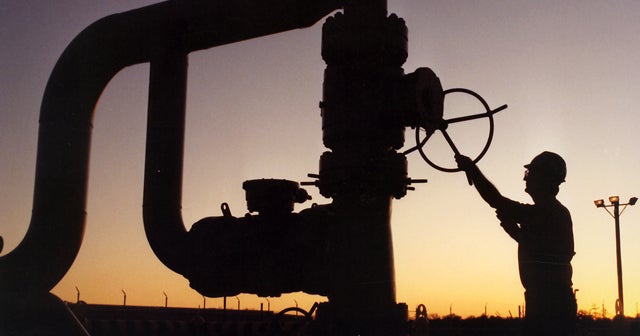
President Trump ordered the release of 172 million barrels of oil from the United States’ Strategic Petroleum Reserve on Wednesday, after oil prices rocketed to their highest levels in years amid the U.S.’s war with Iran.
The releases will start next week and take about 120 days, Energy Secretary Christopher Wright said Wednesday in a statement. The move is part of a coordinated release by the International Energy Agency, whose 32 member countries — mostly U.S. allies — announced earlier Wednesday they would let 400 million barrels of oil flow out of their emergency reserves.
Wright said the U.S. plans to replenish the reserve with 200 million barrels of oil “within the next year.” Mr. Trump told reporters late Wednesday that after the reserve is tapped, “we’ll fill it up.”
“For 47 years, Iran and its terrorist proxies have been intent on killing Americans. They have manipulated and threatened the energy security of America and its allies,” Wright said. “Under President Trump, those days are coming to an end.”
The benchmark U.S. crude oil price, West Texas Intermediate, was trading at just over $92 per barrel as of Wednesday evening at 8:15 p.m. ET. Prices had climbed about 7.2% over the course of the day and were largely unchanged following the announcement of a Strategic Petroleum Reserve release, which was widely expected.
The Strategic Petroleum Reserve — stored in massive underground caverns in Texas and Louisiana — held about 415 million barrels as of last week, according to government figures. In total, the IEA says its members have more than 1.2 billion barrels in their reserves.
The IEA’s reserve system was set up in the 1970s, in the wake of an oil embargo by Arab states that choked off shipments to the U.S. and some of its allies. The U.S. and other member countries have tapped their reserves periodically to deal with price shocks, most recently in 2022, when Russia’s invasion of Ukraine caused energy prices to spike.
Oil prices shot up after the U.S. and Israel began conducting military strikes on Iran almost two weeks ago, and have remained elevated ever since due to fears about major supply shortfalls.
Commercial traffic through the Strait of Hormuz, a key oil chokepoint between Iran and the Arabian Peninsula, has effectively come to a standstill, amid worries that tankers could be struck. The waterway carries around 20% of the world’s oil, or 15 million barrels per day, and as traffic out of the Persian Gulf gets blocked, some oil producers have cut production.
Mr. Trump has sought to unfreeze ship traffic, promising insurance coverage for oil tankers and repeatedly threatening Iran with severe strikes if it tries to block the Strait of Hormuz. Iran signaled this week it may try to deploy naval mines in the strait, CBS News reported, leading Mr. Trump to threaten “military consequences…at a level never seen before.” The president also told CBS News on Monday he was “thinking about taking [the strait] over.”
But with few ships still transiting the strait, tapping the Strategic Petroleum Reserve is one option in Mr. Trump’s arsenal to deal with shortages and high prices.
It’s unclear how much of an impact the releases will have. Experts told CBS News earlier this week that taking oil out of the Strategic Petroleum Reserve will not fix the underlying supply issue that is causing prices to spike.
“The SPR can help, but it’s not a silver bullet, and it’s not going to take away all the pressure on consumer prices,” said Nicholas Mulder, professor of history at Cornell University, who studies the economic impacts of wars and sanctions. “The war is driving up prices on the world market, and there isn’t an easy way out.”