
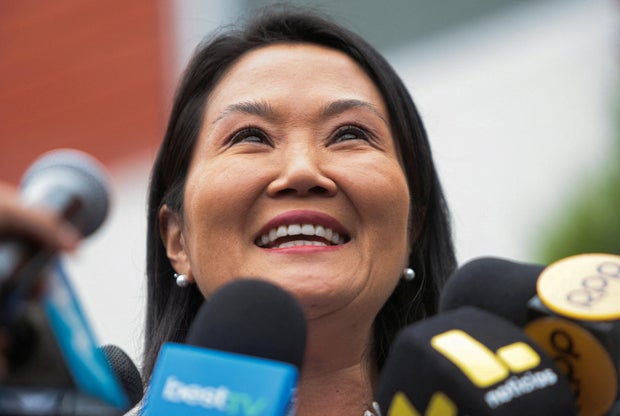
Peru’s right-wing presidential candidate Keiko Fujimori built what may be an unassailable lead on Tuesday as vote counting for the runoff election entered its final stages, official figures showed.
With 99.86 percent of ballots tallied, Fujimori held 50.12 percent of vote, a margin of just over 43,000 over her leftist rival Roberto Sanchez, according to data published online by the National Office of Electoral Processes.
Stifs Paucca / REUTERS 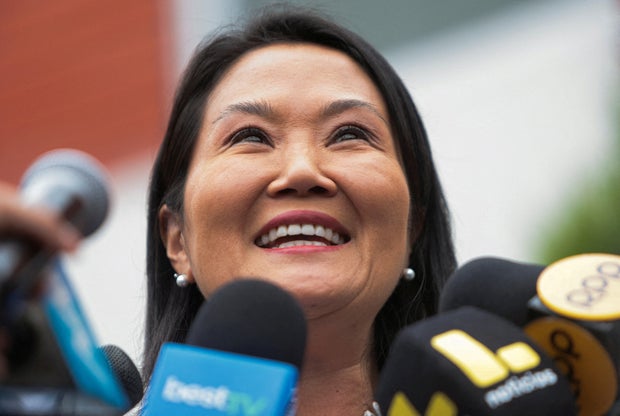
Before declaring a winner, election officials need to process 131 tally sheets, which represent around 39,000 votes — an insufficient number to enable Sanchez to catch up.
The electoral authority doesn’t plan to declare a winner until mid-July, the Reuters news agency reports, adding that a Fujimori victory would extend Latin America’s move to the right.
Populist Abelardo de la Espriella narrowly won a polarizing presidential runoff in Colombia Sunday.
Voters concerned about crime have been drawn to hardline candidates.
Sanchez said he wouldn’t recognize a government headed by Fujimori, claiming a “serious violation of the electoral process.”
Sanchez alleges administrative irregularities in the handling of votes from overseas — roughly 300,000 ballots — by the electoral authority.
The overseas vote largely favored Fujimori, who was propelled by massive support from voters in the United States and Japan.
Fujimori’s party said it would wait for the count to be completed before declaring victory.
The winner will take office July 28 for a five-year term.
The June 7 runoff pitted the daughter of late former president Alberto Fujimori against Sanchez, the political heir of former president Pedro Castillo.
Many voters had hoped the election would draw a line under years of political chaos that has seen a string of presidents jailed, deposed and impeached.
But the tight result shows the South American nation remains deeply divided between the populous coast and the more rural, Indigenous south.