As many Americans plan their summer vacations, airfares are taking off.
Airline ticket prices have jumped because of higher oil and jet fuel costs stemming from the Iran war. With prices likely to stay elevated, aviation experts urged consumers to move quickly to lock in their travel plans.
“If you haven’t booked for this summer, get busy,” Henry Harteveldt, an airline industry analyst with Atmosphere Research Group, told CBS News.
“Don’t wait, hoping that the fares are going to go down,” he added. “They’re not.”
Travelers eager to save money should consider leaving later in the summer, when demand is typically lower and jet fuel prices are potentially more certain, Harteveldt said.
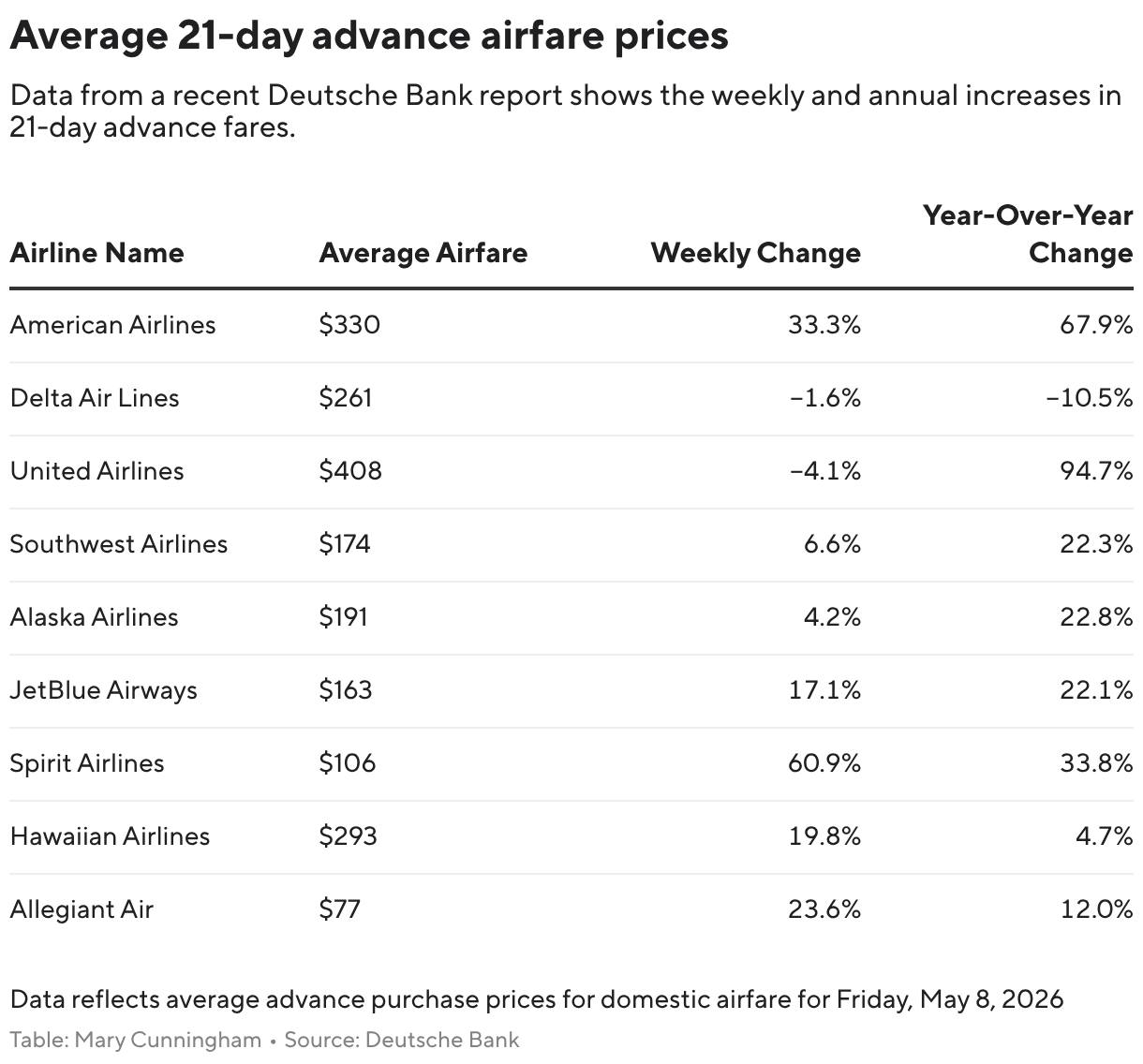
Jet fuel prices, which account for roughly 25% to 30% airlines’ costs, were up more than $2 a gallon as of earlier this month and remain elevated. With operational costs sharply higher than before the U.S. and Israel attacked Iran on February 28, airlines are passing along some of those expenses to travelers.
As of April 13, the average domestic round-trip flight cost $358, up 18%, or about $55, from the same period a year ago, according to Kayak. International flights have also gotten pricier. Data from the travel booking website shows that the cost of a round-trip economy flight from the U.S. to foreign destinations has increased by an average of $115 over the last year to $1,064.
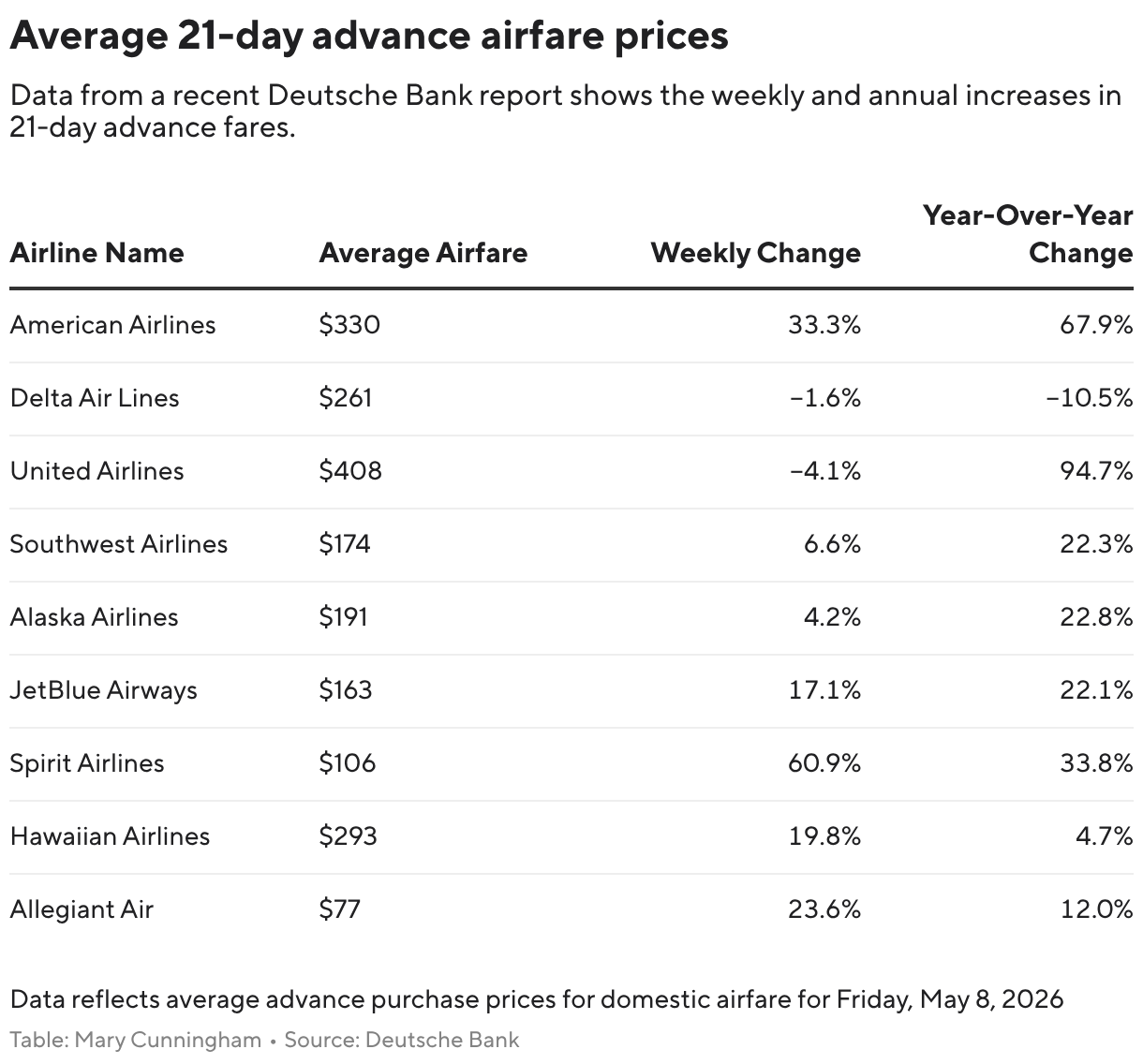
Overall, airfares were up nearly 15% in March compared to the same time last year, according to government data. United Airlines CEO Scott Kirby told CBS News in an interview last month that the carrier has raised its fares by 15% to 20%.
In addition to raising ticket prices, carriers including Alaska Airlines, American Airlines, Delta, JetBlue, Southwest Airlines and United have increased their bag fees to help offset rising fuel prices, while other airlines have sought to cut costs by eliminating less profitable routes. That includes United, which plans to cut its flight volume by 5% this summer due to higher oil prices, Kirby said.