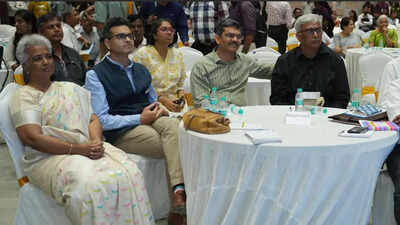
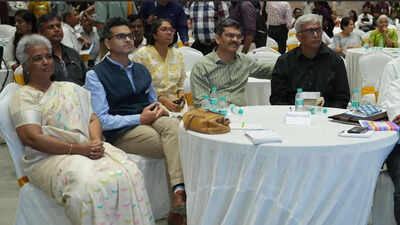
PUNE: Calling for a shift from purely academic learning to a more skill-oriented education system, Maharashtra Education Commissioner Sachindra Pratap Singh on Tuesday said schools must equip students with practical and vocational skills if India is to create an employable and future-ready workforce.Speaking at the 20th anniversary celebration of Lend A Hand India (LAHI), a Pune-based non-profit working in the field of vocational education, Singh said traditional education models need to evolve in response to changing industry requirements and technological advancements.“To create an employable generation, schools must focus on skills. Degrees alone cannot guarantee employment in today’s world. Students need exposure to practical learning, workplace experiences and problem-solving abilities from an early stage,” he said.The event, held at the Pune International Centre in Pashan, brought together policymakers, educationists, industry leaders, development-sector professionals, students and alumni to reflect on two decades of efforts to integrate vocational education into mainstream schooling.Singh said experiential learning is becoming increasingly important in education and noted that the state government is examining ways to strengthen industry exposure for students. He also stressed the need for greater collaboration between schools, government agencies and employers to bridge the gap between education and employability.Founded in 2006, Lend A Hand India has emerged as one of the country’s leading organizations promoting skill-based education. The organisation works with schools across more than 20 states and has reached nearly 2.3 million students through programmes focused on vocational training, entrepreneurship and applied learning.Industrialist Prataprao Pawar, highlighted the growing importance of technology in education and workforce development. Referring to rapid advancements in Artificial Intelligence, he said educational institutions must adapt quickly to prepare students for emerging opportunities.“India’s demographic advantage can become meaningful only if young people are equipped with relevant skills. Education should encourage innovation, entrepreneurship and adaptability rather than focusing solely on conventional career paths,” Pawar said.A key attraction at the event was a model skill lab where guests experienced hands-on learning activities that form part of the organisation’s programmes. Exhibits tracing the organisation’s journey and milestones over the last two decades were also displayed.The programme featured a fireside conversation with students and alumni, who shared how vocational education had influenced their academic journeys and career aspirations. Many spoke about gaining confidence, technical competencies and practical exposure through school-based skill development initiatives.Addressing the gathering, LAHI co-founder Sunanda Mane reflected on the organization’s growth from a small initiative to a national movement. She said the idea of introducing vocational learning within mainstream schools was still relatively uncommon when the organization began its work 20 years ago.“Today, skill-based education is no longer viewed as an alternative. It is increasingly recognized as an essential component of quality education and an important pathway to employment and entrepreneurship,” she said.The event also saw the release of a coffee-table book documenting the organization’s 20-year journey, impact and partnerships. Speakers emphasized that as India seeks to build a globally competitive workforce, vocational education and experiential learning will play a central role in shaping the future of school education.