By late June, the heat has a way of changing how a prayer feels. A glass of water looks different. A mantra sounds different. Even the simple act of sitting before a diya, the oil lamp, can carry more weight when the day itself asks for restraint. That is part of what makes the 2026 pairing of Gayatri Jayanti and Nirjala Ekadashi so striking for many Hindu families, not because it needs dramatic claims, but because mantra and vrata, sacred recitation and disciplined fasting, meet on the same tithi, lunar day.
Why this Ekadashi draws unusual attention
Among the 24 Ekadashis observed across the lunar year, Nirjala Ekadashi has a stern reputation. Nirjala means “without water”, and that alone tells you why this vrata, sacred fast, is treated with a special seriousness. It falls in Jyeshtha, when much of India is deep in summer. The discipline is not decorative. It is meant to sharpen sankalpa, a conscious spiritual resolve, and direct the mind toward Bhagavan Vishnu.Traditionally, devotees who keep Nirjala Ekadashi abstain from both food and water for the fasting period, then break the fast on Dwadashi, the following lunar day, during the proper parana window. In many homes it is also called Bhimseni Ekadashi or Bhima Ekadashi, recalling the Pandava Bhima, who, according to a well-known Puranic telling, found it hard to observe all the Ekadashi fasts of the year. He is said to have been advised that keeping this one fast with full discipline would carry the merit associated with the other Ekadashis.That story matters because it gives the vrata a human shape. Not everyone is a natural ascetic. Not everyone can fast month after month. The Bhima legend does not make the observance easy, but it does make it relatable. It says, in effect, that effort counts when it is sincere.A word of care belongs here. Nirjala fasting is traditionally observed by healthy adults who freely choose it as part of their religious practice. Children, pregnant people, elderly readers, and anyone with health conditions should not feel pressured to attempt a waterless fast. Many families adapt the observance with phalahar, fruit-based fasting, or with a simpler sattvic, pure and light, diet while keeping the devotional spirit intact. That is a matter of family tradition, health, and guidance from elders or priests, not a test of worthiness.
When Gayatri Jayanti arrives on the same tithi
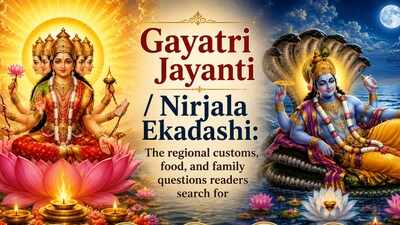
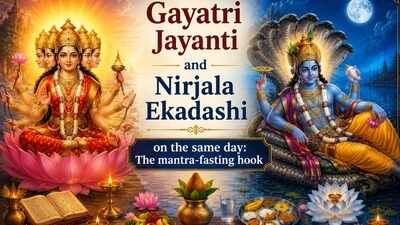
Gayatri Jayanti brings a different texture to the day. If Nirjala Ekadashi is about restraint, Gayatri Jayanti is about illumination. It marks, as per many traditions, the appearance of देवी Gayatri, revered as Veda Mata, the mother of the Vedas, and closely linked with the Gayatri Mantra, one of the most widely recited Vedic mantras in Hindu practice.The mantra, “Om Bhur Bhuvah Svah, Tat Savitur Varenyam, Bhargo Devasya Dheemahi, Dhiyo Yo Nah Prachodayat”, is a prayer to Savita, the divine solar radiance, asking that our intellect be guided and awakened. That is why Gayatri upasana, devotional worship of Gayatri, is often associated not with spectacle but with clarity, study, and disciplined japa, repeated mantra recitation.Some regional and scriptural traditions connect this day with Rishi Vishwamitra, the sage associated with the revelation of the Gayatri Mantra. As per some traditions, Jyeshtha Shukla Ekadashi is remembered as the day on which the mantra was first uttered or made available for the uplift of humanity. Not every sampradaya, lineage or tradition, frames it in exactly the same way, but the broad devotional mood remains consistent. This is a day to turn inward and refine the buddhi, the faculty of discernment.That is what makes the June 25 overlap interesting. One observance asks the body to step back. The other asks the mind to become clear. Together, they create a day that many devotees treat with unusual focus, even if their actual practice remains simple.
The story devotees carry into the fast
Nirjala Ekadashi is usually narrated through the Mahabharata world. Bhima, mighty in strength and appetite, is unable to keep the regular Ekadashi fasts observed by his mother Kunti and brothers. He approaches Sage Vyasa for a way to honour dharma without pretending to a discipline he cannot maintain all year. Vyasa then prescribes the observance of the Jyeshtha Shukla Ekadashi fast without water, with devotion to Vishnu and charity, especially the offering of water and food after the vrata. Because of this association, the fast is still called Bhimseni in many places.Gayatri Jayanti, by contrast, is remembered through Vedic memory and goddess tradition. Gayatri is not merely a deity in image form for many devotees. She is also chandas, the sacred metre, mantra shakti, the power of the mantra, and the radiance of awakened understanding. In popular worship, she is often visualised as a serene mother-form, linked with wisdom and purity. In more textual traditions, the emphasis falls on mantra, recitation, and inner discipline.Put together, these two streams produce a day that is less about grand public festivity and more about personal observance. You may not see giant processions. You are more likely to see a clean altar, a copper lota, a small offering of flowers, and someone counting mantras under their breath in the stillness of morning.
A simple puja rhythm for June 25
If you plan to observe the day at home, keep it orderly rather than elaborate. Rise early, bathe, and make a sankalpa for the observance, naming the tithi and your intention as best you know it. Clean the puja space. Offer water, flowers, and a lit diya before Vishnu or a form of Narayana for Ekadashi, and before an image or symbol of Gayatri Mata if your household keeps that tradition.Many devotees begin with achaman, ritual sipping of water, though those keeping a strict Nirjala fast may complete all such preparatory acts before the vrata begins according to their tradition. Vishnu Sahasranama, the thousand names of Vishnu, is commonly recited on Ekadashi. For Gayatri Jayanti, the day is especially suited for Gayatri Mantra japa. Some will chant 11, 21, or 108 repetitions. Those already initiated into Gayatri upasana may follow their daily count and sandhya, twilight prayer discipline, with greater care on this day.Offerings are usually simple. Tulsi, holy basil, for Vishnu, flowers, incense, and a calm mind are enough. If you are not keeping the strict Nirjala form, many households avoid grains and beans on Ekadashi and take fruit, milk, or vrat-friendly foods according to family custom.Do remember the timing issue. Ekadashi fasting follows tithi rules, not just the English date on a wall calendar. The parana on Dwadashi should be done within the proper local window. This is especially relevant for readers outside India, where time zone differences can shift observance dates. Check a reliable local panchang before finalising your fast and your break-fast time.
What readers should actually do this year
First, mark June 25, 2026 if you are following the New Delhi calendar reference in the brief. Second, decide honestly how you will observe. A full Nirjala fast is a traditional form, but it is not something to attempt casually. Third, give Gayatri Jayanti its own place in the day. Even a few attentive rounds of the Gayatri Mantra, spoken with care and understanding, can keep the observance from becoming only about abstinence.And if your home has no established custom, keep it modest. Light the lamp. Sit for japa. Read a short passage on Ekadashi or Vishnu bhakti, devotion to Vishnu. Break the fast correctly the next day if you have kept one. By sunset on a hot Jyeshtha day, when the room has gone quiet and the brass lota is still waiting by the altar, you will know whether the day was observed with attention. That, more than display, is what this meeting of mantra and fast asks for.